Mosses: what they are and why they are important for ecosystems
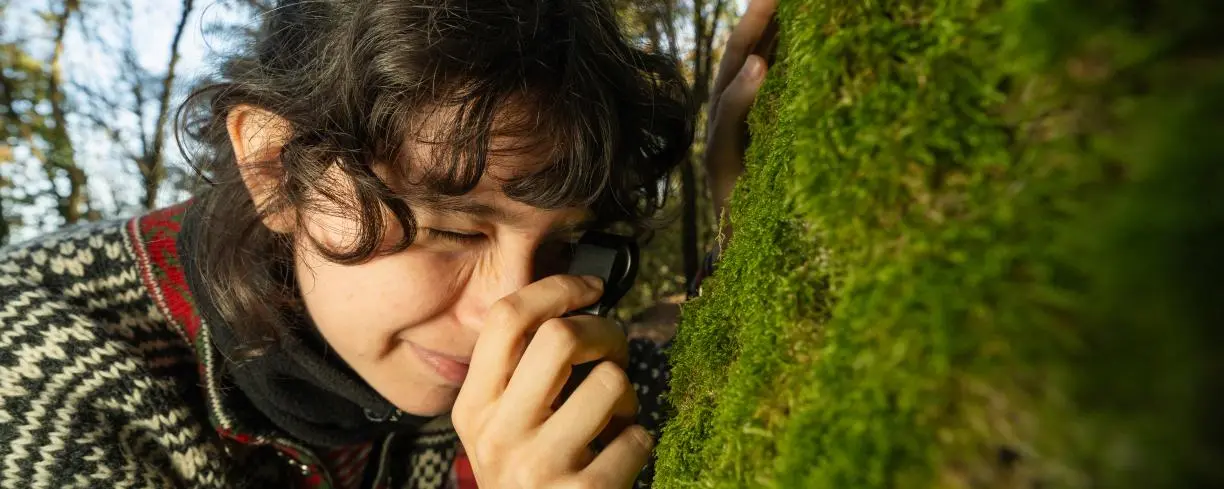

What do you think of when you think of mosses? Fluffy carpets, green-covered rocks, slippery stone paths and, when winter arrives, nativity scenes in the corner of the dining room. But what do we know about these mini plants? Without them, landscapes would be very different.
What are mosses?
What are mosses?
Mosses are plants with a very simple structure. This means that unlike other plants, they do not have a circulatory system to transport water and nutrients, nor do they have deep roots or woody tissues like wood. Therefore, they are technically classified as non-vascular plants .
Mosses are the plants that most closely resemble the first to colonize terrestrial environments . Despite having evolved like other plant species, they remain the closest to those that, about 500 million years ago, left the water to adapt to living on dry land. In fact, a study by CREAF reveals that today's mosses are like a true evolutionary relic : the bridge that connects planktonic algae with terrestrial plants.
What types of mosses exist?
What types of mosses exist?
In scientific language, mosses are part of the bryophyte group, which also includes liverworts and anthocerotes . Mosses can be classified into 8 different classes.
Sphagnopsida (sphagnum)
Sphagnopsida (sphagnum)
They have the appearance of a succulent or fleshy plant. They are the key element of peat bogs and have a great capacity to absorb water.
Andreaeopsida
Andreaeopsida
Typical of cold areas that tend to grow on top of siliceous rocks. They have a dark or reddish color, and stand out for having lantern-shaped capsules.
Polytrichopsida
Polytrichopsida
They are the largest there are, with a showy and complex structure.
Takakiopsida
Takakiopsida
They are small and fragile, discovered in the 19th century in the Himalayas.
Andreaeobryopsis
Andreaeobryopsis
It has sexual organs on different plants, which is called a dioecious species.
Tetraphidopsida and Oedipodiopsida
Tetraphidopsida and Oedipodiopsida
These are two very rare and scarce classes of mosses. They have been found in cold areas of America and Eurasia.
Bryopsida
Bryopsida
It is the most abundant type and includes 95% of the moss species we know.
YOU MAY ALSO BE INTERESTED IN
YOU MAY ALSO BE INTERESTED IN

Why are mosses important for ecosystems?
Why are mosses important for ecosystems?
Mosses play an essential role in ecosystems because they have several functions. On the one hand, they are soil moisture regulators . Mosses are like sponges because they can absorb a lot of water from the rain and keep it in different parts.
They also play a very important role in regulating soil fertility , especially in peatland habitats, where they play a fundamental role in retaining organic matter and capturing carbon dioxide and facilitating the growth of other plants. In burned forest lands, mosses also play a very important role because they are the first to colonize the soil when it begins to regenerate.
Mosses are also important because they are the habitat of many species , especially microorganisms such as bacteria, microscopic algae or diatoms, as well as invertebrates such as nematodes or tardigrades.
On the other hand, they are bioindicator organisms. Since their distribution depends on the climate and the type of substrate and they are very sensitive to environmental conditions, they make them very good indicators of the quality of the environment and air , just as lichens do.
How do they interact with the environment?
How do they interact with the environment?
For years, CREAF has carried out several studies to better understand the ecological function of mosses and their role in the balance of terrestrial ecosystems . On the one hand, the Elemental Diversity and Macroecology (EDM) research team, led by CREAF researcher Marcos Fernández , studies how the elemental composition or “elementome” of bryophytes – chemical elements such as carbon, nitrogen, calcium or phosphorus – determines their way of functioning, using environmental resources and relating to other species in ecosystems.
The group is currently working on the BRYOELEM project to study how the elemental composition of bryophytes changes when they compete with other species and when they are found in different environments , from dry places to high mountains. One of the already published works showed that mosses emit volatile chemical compounds to defend themselves from environmental stress .
YOU MAY ALSO BE INTERESTED IN
YOU MAY ALSO BE INTERESTED IN

Where do mosses live?
Where do mosses live?
Mosses need water and humidity to survive, as they do not have deep roots or vascular systems to transport nutrients. For this reason, they tend to grow in cool, shady environments with available water . However, they are very flexible and can adapt to colonize everything from springs to rocks and cold areas.
Natural fountains
Natural fountains
Springs are a refuge of high biodiversity , as they maintain constant humidity even in Mediterranean climates. They act as islands of refuge , creating conditions very different from the dry environment that surrounds them. In Catalonia, springs are well distributed and reflect the diversity of climates and substrates of the territory, which makes them ideal places to study bryophytes. For example, in Garrotxa, one of the rainiest areas, CREAF has found more species .
Rocky surfaces and poor soils
Rocky surfaces and poor soils
Mosses are pioneers in colonizing rocks and poor soils , where other plants cannot live. Thanks to their rhizoids , a root-like structure, they adhere to hard surfaces and contribute to soil formation.
Wetlands and forests
Wetlands and forests
Shady, damp forests are an ideal habitat for mosses. They grow on logs, leaf litter, and organic-rich soils, helping to retain moisture and protect the soil from erosion. If you've ever gone mushroom picking, you'll know that mosses are the perfect beds for many fungi.
Cold regions and relationship with permafrost
Cold regions and relationship with permafrost
In arctic and high mountain areas , mosses play a key role in the formation and maintenance of permafrost, acting as thermal insulators and retaining moisture . These communities are essential for biodiversity in extreme environments.

Mosses and climate change
Mosses and climate change
Climate change poses major challenges for mosses because they are highly dependent on the availability of water and humidity, the predicted scenarios indicate that many habitats where mosses live could change drastically . One example is documented by a study carried out by CREAF, which found that Mediterranean springs are drying up .
Research on bryophytes is also being conducted in polar ecosystems. Researcher Mariana García Criado , a Marie Skłodowska-Curie grantee at CREAF, studies temporal changes in bryophytes and lichens in the Arctic and Antarctic , as well as their potential capacity to adapt to climate change. The results of her BIPOLAR project will help us better understand the direct effects of temperature and precipitation variations on these small —but essential— species in polar areas.
YOU MAY ALSO BE INTERESTED IN
YOU MAY ALSO BE INTERESTED IN

Moss, better in the forest than at home
Moss, better in the forest than at home
Moss has always been attractive for decoration, but currently there are several regulations that restrict it. Mosses have a very important function in the different ecosystems where they live, which is why we recommend avoiding collecting them.
The Generalitat de Catalunya has a public map that indicates which areas you cannot collect moss in . As a general rule, it is prohibited to collect moss in protected natural areas, including springs, inland waters or in forest land that has suffered a fire in the last 10 years.

Moss. Author: Galdric Mossoll
Frequently asked questions about mosses
Frequently asked questions about mosses
Do mosses have roots?
No, they have rhizoids, which are like the roots of vascular plants, but their function is mainly to anchor them to the substrate.
Are there mosses all year round?
Yes, they can dry out, but when it rains they turn green again.
What is the difference between a moss and a lichen?
Mosses are plants; lichens are lichenized fungi, which means they form symbiotic associations with green algae or cyanobacteria, and in some cases also yeasts.
Can mosses live without sunlight?
No, but they can live inside caves, as long as there is a source of light, natural or artificial. This is the case with what are called “lamp flora”, mosses that grow deep inside caves and only live there because there is a light on for so many hours a day.
How do mosses reproduce?
Sexually and asexually. Sexually through sporophytes that release spores into the environment, and asexually through buds or simply fragments of mosses that grow back and form an adult moss under the right conditions.
WITH THE COLLABORATION OF:
WITH THE COLLABORATION OF: