06/03/2026 News

Greenways are an opportunity to connect wild pollinators

Communication Technician

Galdric Mossoll Clos

I am an environmental biologist specialised in biodiversity management and conservation. I use photography as a tool for scientific communication, to raise awareness and promote nature conservation.

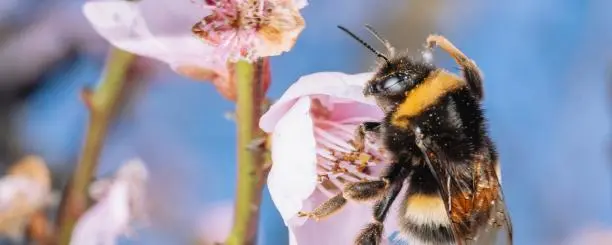
Insect populations are experiencing an alarming decline on a global scale, and pollinators are no exception to this trend. The decline particularly affects groups such as bees, butterflies and hoverflies, which are mainly affected by climate change, the use of pesticides, habitat loss and intensive agriculture. These data are worrying, among others, because 90% of flowering plants depend on insects to transfer pollen and ensure their sexual reproduction.

The need to halt this decline has motivated the cross-border project BeeConnected SUDOE , with the aim of restoring the margins of green infrastructures , to improve the connectivity of wild pollinators between fragmented habitats of high natural value. The actions will be carried out over the next three years in some provinces of France, Portugal and Spain. In the case of Catalonia, specifically the work will be carried out in the Girona counties of Baix Empordà, Gironès and La Selva.

Anselm Rodrigo CREAF

Pollination is a key ecological process for the production of essential resources for a multitude of species (including humans) and is vital in shaping many of the natural habitats and landscapes that we recognize and enjoy. With this project we want to facilitate that insects are well connected between green infrastructures such as urban parks and greenways for cycling or walking.

Anselm Rodrigo, CREAF researcher

Starting point in Girona

Recently, BeeConnected SUDOE has managed to bring together institutional representatives, research centers, conservation associations, environmental education centers, nurseries and managers of protected natural areas at the same round table. During the working day, held at the Casa de la Cultura of the Girona Provincial Council, the different actors have been able to discuss and define the priorities of the actions to be executed, in order to adapt them to the socio-environmental reality of the greenways of the Girona regions.

All stakeholders agree on the need to develop a guide to good practices to promote wild pollinators in the management of urban and peri-urban green spaces . In line with this, the aim is to promote municipal gardening that is closer and friendlier to wild pollinators, as it has been shown that urbanized environments are not innumerable to the life of pollinating insects, and at the same time their presence within towns, cities or green infrastructures can promote knowledge and allow the involvement of citizens in their protection.

Native plant seed banks

One of the recurring problems when restoring spaces or landscaping urban areas favorable for pollinators is the lack of stock in seeds and seedlings of native floral species . “This is because nurseries have little demand for this type of seeds and, therefore, do not produce them,” explains Iraima Verkaik, research technician at CREAF. To solve this, the participants have proposed creating a seed bank of native plants, in order to diversify plantings and favor pollinator habitats, whether in urban or peri-urban spaces, such as greenways.

Iraima Verkaik CREAF

The lack of stock in seeds and seedlings of native floral species is due to the fact that nurseries have little demand for this type of seed and, therefore, do not produce them.

Iraima Verkaik, CREAF researcher

To solve this, the participants have proposed creating a seed bank of native plants, in order to diversify plantings and promote pollinator habitats, whether in urban or peri-urban spaces, such as greenways.

Regarding the control of vegetation on the margins and public spaces using herbicides and mowing, all the stakeholders at the conference agree that this practice needs to be reviewed and improved. In this sense, it is proposed to define selective protocols for the use of herbicides in specific cases and to mow margins and green areas selectively , in order to maintain areas with floral resources at all times for as long as possible, without compromising, in any case, the accessibility or safety of public spaces.

Modern building on a grassy hill with a tree in the foreground.

Selective mowing to maintain floral resources throughout the year on the UAB campus. Image Galdric Mossoll

The BeeConnected SUDOE project has Interreg SUDOE funds from the European Union, is coordinated by the Autonomous University of Madrid, and the scientific part involves the University of Bordeaux (France), the University of Coimbra (Portugal) and CREAF. The Regional Council of Castile-La Mancha, the Municipal Chamber of Coimbra and the Provincial Council of Girona will be the institutions responsible for developing the actions in the territory, while the Spanish Society of Ornithology (SEO/BirdLife) will be responsible for the awareness-raising actions.