Synthesis action, Firebird workshop
Synthesis action, Firebird workshop
7, 8, AND 9 OF SEPTEMBER 2026
Bird diversity responses to wildfire and human-controlled fire regimes

Why FireBird? Bird responses to changing fire regimes
Why FireBird? Bird responses to changing fire regimes
Under global environmental change, fire regimes and their impacts on biodiversity are changing around the world. Many bird species are highly sensitive to changes in vegetation after fire, and post-fire bird monitoring schemes help track these responses across different fire regimes and ecosystems and test the pyrodiversity hypothesis. The valuable existent schemes are usually small-scale and cover a few regions globally. Consequently, integrating all this data from diverse socioecological regions with varying pyrodiversity patterns will guide the implementation of integrated fire management, which supports ecological fire flows within ecological boundaries for the restoration of altered fire regimes.

The FireBird network and workshop
The FireBird network and workshop
At the start of 2026 we initiated the FireBird network to foster international collaboration and provide guidance for future research endeavours in this critical area. At the FireBird workshop we laid the groundwork to establish the FireBird network by sharing knowledge on post-fire bird monitoring and bird responses and developing network objectives and roadmap.


Objectives
Objectives
- Strengthen connections and international collaboration in post-fire biodiversity research
- Build overview of current knowledge and data availability on bird-fire relations around the world.
- Identify pressing research questions for bird responses to fire at an international level.
- Discuss network governance and future.
- Work collaboratively on ongoing pilot projects.
Outcomes:
Outcomes:
- Roadmap for the development of the FireBird network;
- Development of thematic objectives for global patterns of global post-fire biodiversity responses;
- Prioritisation of specific research objectives within the thematic objectives;
- Strengthened collaboration between CREAF, national, and international partners;
- Proposed a synthesis article on global patterns of bird responses to wildfire.



Schedule
7 / 8 / 9 OF SEPTEMBER 2026
- 9:00-9:30: Presentation: Welcome and introduction
- 9:30-11:00: Presentation: Participant’s personal reflections on the workshop and FireBird network
- 11:00-11.30: Coffee break
- 11:30-12:30: Presentation and discussion: Pilot project – Global integration for occurrence at time since fire
- 12:30-13:30: Presentation and discussion: Pilot project – Site level data integration between Galicia and Catalonia
- 13:30-15:00: Lunch break
- 15:00-16:30: Workshop dynamics and discussion: Developing the thematic objective of the network
- 16:30-17.00: FireBird logo
- 8:30-13:30: Excursion: Visit the areas burnt in 1998 and recent fires from this year in Segarra
- 13:30-15:00: Lunch break
- 15:00-16:00: Study cases of stakeholder engagement and management
- 16:00-17:00: Traditional and novel methods for post-fire bird monitoring. Monitoring, Citizen science (eBird), Novel monitoring techniques, Remote sensing.
- 9:00-11:00: Brainstorming session presentation: Scientific applications of the network and scientific questions that can be answered through collaboration.
- 11:00-11.30: Coffee break
- 11:30-13:30: Developing the network roadmap. Requirements to achieve network objective and address identified research questions: Fair collaboration, using the network for capacity building, data standards
- 13:30-15:00: Lunch break
- 15:00-16:45: Discussion Paper – Develop a structure of a perspective paper on global collaboration in post-fire bird studies. Task assignation
- 16:45-17:00: Summary, organizing the roadmap, potential publication and goodbye

Tristan Bakx
CREAF, ECOLAND (proposal co-lead)

Lluis Brotons
CREAF, CTFC, ECOLAND (proposal co-lead / PI)

Adrián Regos
MBG-CSIC, (proposal co-lead)

Maria Lumbierres
CREAF, ECOLAND

Pere Pons
University of Girona

Roger Puig Gironés
University of Girona
Confirmed speakers and facilitators
Confirmed speakers and facilitators

Tristan Bakx
CREAF, ECOLAND (proposal co-lead)

Lluis Brotons
CREAF, CTFC, ECOLAND (proposal co-lead / PI)

Arnau Tolrà
CREAF, ECOLAND

Adrián Regos
MBG-CSIC, (proposal co-lead)

Maria Lumbierres
CREAF, ECOLAND

Pere Pons
University of Girona

Roger Puig Gironés
University of Girona

Anna Costa
CREAF, ECOLAND

Dani Villero
CREAF, ECOLAND

Fernando Garcia
MBG-CSIC, Galicia, Spain

Luke Kelly
University of Melbourne, Australia

Maroua Bouharma
Mohamed Cherif Messaadia University, Algeria

Colleen L. Seymour
South African National Biodiversity Institute, South Africa

Morgan Tingley
Institute of the Environment and Sustainability, University of California Los Angeles, United States of America

Sarahy Contreras Martínez
University of Guadalajara, Mexico

Frederick Rainsford
University of Turin, Italy

Pierre Drapeau
University of Québec Montréal, Canada

Junior Tremblay
Environment and Climate Change Canada, Canada
Organizations
Organizations


Funding
Funding
Severo Ochoa: The FireBird workshop is been carried out within the framework of the Severo Ochoa Centres of Excellence programme, Ref. CEX2023-001340-S, funded by MICIU/AEI/10.13039/501100011033 and the RESFIRE project (PID2023-152690OA-C21) funded by MICIU/AEI /10.13039/501100011033 and by FEDER, EU.
RESFIRE and TABMON: This workshop was partially funded by MCIN/AEI through the projects RESFIRE (Proyecto RESFIRE PID2023-152690OB-C21 financiado por MCIU /AEl /10.13039/501100011033 / FEDER, UE) and Biodiversa+, TABMON, (Agencia Estatal de Investigación, PCI2024-153427)


Venue
Venue
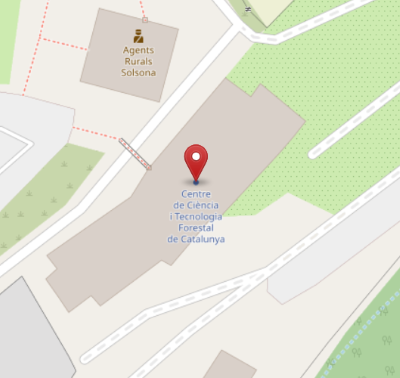
Centre for Forestry Science and Technology of Catalonia
(Centre de Ciència i Tecnologia Forestal de Catalunya; CTFC)
Crta. de St. Llorenç de Morunys, km 2
(direc. Port del Comte)
25280 Solsona