24/11/2025 News

What is the future of geographic information systems?

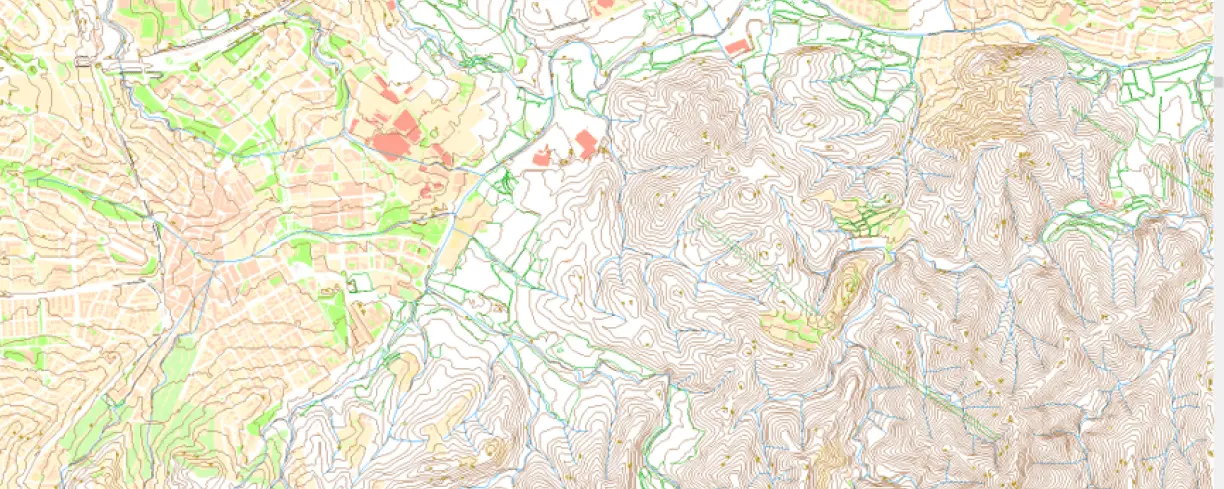
Mapa vectorial con varias capas abierto en MiraMon. Autoría: MiraMon.
Communication Technician

Diego de la Vega

Scientist, historian and science communicator. I am passionate about science, mainly in its social and historical dimensions.

WITH THE COLLABORATION OF:

Everything happens somewhere. Geographic Information Systems, or GIS, are tools that help us visualize, store, edit, and analyze any type of information that has a geographic reference, a position in space. 

There are many programs capable of working with geographic information. At CREAF, we are proud to be developing MiraMon, a free and fully featured GIS program that is a strong alternative to QGIS and ArcGIS, two of the best-known geographic information systems. MiraMon integrates seamlessly with both and adds tools and functionality they do not include. 

To celebrate three decades of MiraMon development, CREAF researchers Joan Masó and Núria Julià shared their insights on where geographic information science and remote sensing are headed during the Iberian Conference on Spatial Data Infrastructures (JIIDE25), held from November 12 to 14 at the University of Oviedo. 

Their contributions centered around three workshops exploring: 

  • The latest updates to the MiraMon GIS system.
  • The benefits of implementing OGC APIs when working with geographic information.
  • Why spatial information metadata matters, and how to document it using GeM+, MiraMon’s Metadata Manager. 
Digitalización autoestructurada de MiraMon. Autoría: MiraMon

Self-structured digitization of MiraMon. Author: MiraMon.

What’s new in MiraMon 

MiraMon is a free program downloaded by more than two hundred thousand people in 42 different countries. It supports both remote sensing and cartography, allowing users to work with raster and vector data alike. It also automates large-scale analyses and ensures results inherit metadata from the original files, preserving data lineage. 

Joan Masó CREAF

In 30 years, we have gone from having almost no digital data and having to create it ourselves, to having an overabundance of data from every sector of society, including companies and citizen volunteers. After 30 years of development, MiraMon is ready to make the most of all these data sources, evaluate them, and extract meaningful insights to support decision-making.

Joan Mason, researcher

In recent years, the Grumets development team has expanded MiraMon’s capabilities to keep pace with new trends in the field. For example, MiraMon can now digitize maps with dynamic topology. This means that when you create points, lines, or polygons, the software automatically controls and adjusts how they connect to each other, preventing errors. MiraMon is also fully integrated with GDAL, the leading open-source library for geospatial data. As a result, MiraMon can open virtually any GIS format, and MiraMon’s own vector formats can even be viewed directly in programs like QGIS. 

Another major improvement has been rewriting the programe to run on 64-bit processors, allowing it to use all available computer memory and handle files larger than 4 GB, overcoming an intrinsic limitation of the C programming language. MiraMon also now includes more than 20 new modules. 

Los investigadores Joan Masó y Núria Julià durante su taller en la Universidad de Oviedo. Autoría: MiraMon

Researchers Joan Masó and Núria Julià during the workshop at the University of Oviedo. Author: MiraMon

What OGC APIs are and why they matter

Just as Ikea popularized buying furniture in standard sizes, colors, and formats, the Open Geospatial Consortium aims to ensure that geographic data is shared following international, community-approved standards. 

OGC APIs are modern standards that allow anyone, regardless of prior experience, to access, query, share, or even process geospatial data online more easily than with the older OGC geoservices. They are changing the landscape by making geographic information easier to integrate wiith all kinds of other data and accessible to broader communities. 

Núria Julià

GC PIs are extremely useful, but the geospatial community needs support during this transition, while we continue to improve them. That was the focus of our workshop, discuss best practices and challenges with our colleagues of the Iberian and Latin American Forum (ILAF) of OGC.

Nuria Julia, CREAF research technician

ILAF OGC serves as the communication hub for the Spanish and Portuguese speaking community and a channel for contributing suggestions to the broader OGC standardization processes. It is currently co-coordinated by CREAF and IGN. 

Núria Julià presentando un taller sobre MiraMon. Autoría: MiraMon

Núria Julià presenting a workshop on MiraMon. Author: MiraMon

Why geospatial metadata matters

Geospatial metadata describes geographic data. It answers questions such as Who created a dataset? What does it contain? What location does it refer to? What is its quality and history? Under what conditions can it be used? And much more. 

Núria Julià

Ensuring that geographic information includes and preserves its metadata is absolutely essential for working rigorously. But it requires an effort that is not always made for various reasons. If we want as many geography professionals as possible to complete metadata properly, we must provide tools that make this task easier.

Nuria Julia, CREAF research technician

Usability is key. MiraMon includes its own system to make metadata management much easier. GeM+ is a free, open tool for Windows that lets users create, view, edit, and export metadata from cartographic datasets in XML and other formats. Its latest version even allows GeM+ to open, edit, and save metadata stored in GeoNetwork, the most widely used online catalog for publishing geospatial metadata following international standards. 

About the JIIDE25

The Iberian Conference on Spatial Data Infrastructures is the annual meeting point for public-sector professionals, private-sector specialists, and researchers working across different areas of geographic information. Its aim is to provide a space to discuss the latest trends in geospatial information and remote sensing and to showcase new technologies. This year’s theme was: "AI and territory: exploring new frontiers of spatial knowledge."