

The results show that, on the one hand, ecosystems are suffering increasingly severe fires and, on the other, that they are taking longer to recover

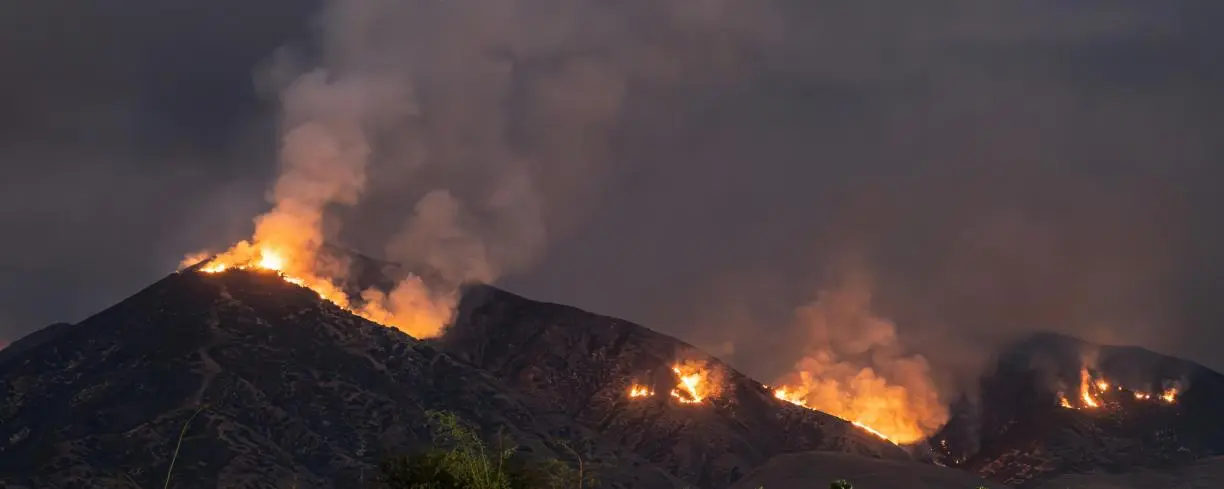
Forest fires have become much more frequent and intense worldwide, especially large-scale fires, which are the most destructive. This trend has caused significant changes in the structure and functioning of forests, making them slower to recover and more sensitive to the severity of fire. These are the conclusions of an international study published in the journal Nature Ecology & Evolution, which analysed 3,281 large fires around the world over two decades, with the participation of Josep Peñuelas, CREAF and CSIC researcher and one of the co-authors.
The data show that since 2010, fires have been more severe and have affected larger areas, especially in arid and boreal regions, among other reasons because that year marks a turning point in the acceleration of climate change, with more heat, droughts and extreme events. The hot spots or regions of the planet that tend to suffer fires of this magnitude are western North America, south-eastern Australia, northern South America, southern Asia, and the central-eastern region of northern Siberia.
The results show that, on the one hand, ecosystems are suffering increasingly severe fires and, on the other, that they are taking longer to recover
“The results show that, on the one hand, ecosystems are suffering increasingly severe fires and, on the other, that they are taking longer to recover”, according to researcher Josep Peñuelas.
Forests normally take an average of four years to recover. According to the study's results, these regions need an additional four to five months to recover vegetation density, as this depends on seed survival rates: the drier and hotter an ecosystem is, the lower the survival rate. On the other hand, to recover the structure of the forest canopy, which is the upper layer of the forest formed by the treetops, forests need an additional 3 to 4 months, among other reasons because they suffer from greater water scarcity and grow more slowly. Finally, they need between 3 and 4 more years to recover gross primary productivity, which is the total energy generated by plants through photosynthesis before spending part of it on respiration. “If this productivity declines, the forest's capacity to store atmospheric carbon is also lost”, warns Josep Peñuelas.
To find out, the study analyses three remote sensing indicators—vegetation density, forest canopy, and gross primary productivity—to see how vegetation has recovered in 3,281 large-scale fires, with more than 10 km² of burned area, that occurred between 2001 and 2021 in different regions of the planet.
Fire severity, more decisive than climate
One of the most relevant findings is that the intensity of fires has a much greater impact on forest recovery than subsequent climatic conditions. The more severe the fire, the slower the regeneration, or it may even stagnate. Among the reasons they point out is that more intense fires destroy not only the tree canopy, but also the seeds, shoots and much of the organic soil, "which greatly reduces the capacity for natural regeneration", explains Josep Peñuelas.
This occurs especially in boreal forests, where they naturally take longer to recover, and with these types of fires, the process becomes even slower. In fact, evergreen coniferous forests, typical of boreal ecosystems, are the most affected: less than a third recovered completely in seven years, while tropical broadleaf forests showed a faster recovery, "as conifers have slower growth and less ability to regrow after severe fires".
The study also highlights that the wetter the soil, the more it favours forest regeneration after fires because it provides the water needed for vegetation to grow back. "This is one of the reasons why tropical ecosystems recover more quickly", adds researcher Josep Peñuelas. In terms of temperature, however, the data show that since 2010 it has played a negative role because it harms seedlings, the young trees that grow just after germination and are much more vulnerable to environmental changes than adults.
A key tool for forest management
These findings are essential for better understanding forest recovery mechanisms, estimating their capacity as carbon sinks, and planning more effective post-fire strategies. In addition, the study warns that many current climate models do not take into account changes in recovery time, which may lead to an underestimation of their long-term impact.
With the global incidence of large-scale fires predicted to increase by 14% by 2030 and up to 50% by the end of the century, the authors make an urgent call for ecological restoration and reforestation measures to accelerate forest regeneration and preserve the role of forests in combating climate change.
Article reference: Lv, Q., Chen, Z., Wu, C. et al. Increasing severity of large-scale fires prolongs recovery time of forests globally since 2001. Nat Ecol Evol 9, 980–992 (2025). https://doi.org/10.1038/s41559-025-02683-x
WITH THE COLLABORATION OF: