04/07/2025 News

How does gardening influence urban biodiversity? The question deciphered by GREENHANCING

Media Relations Manager

Ángela Justamante

Biologist and scientific communicator, currently she is the press officer at CREAF. She also has experience in European projects and scientific outreach.

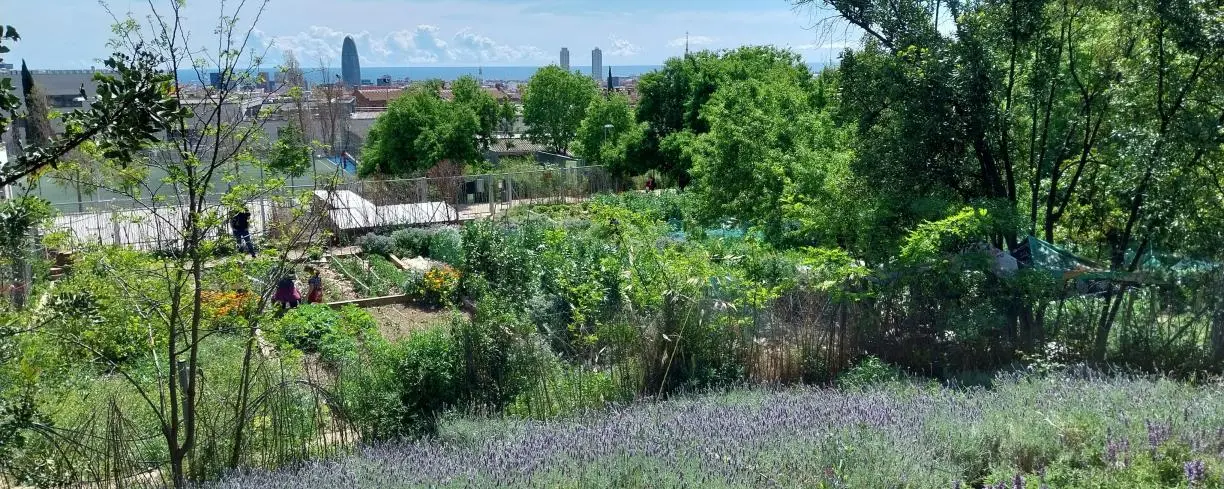
When walking through a city, we sometimes find small oases of vegetation amidst the grayness where communities of citizens of different ages gather to grow food. In addition to being social gathering points, these spaces are also authentic ecosystems home to a large number of insects, such as butterflies and solitary bees that pollinate the vegetation, earthworms, and beetles. But how does the way a garden is managed influence the degree of urban biodiversity? This is the question that the new European project GREENHANCENbt aims to answer. To carry out the research, five urban gardens with very different case histories and communities have been included: two in Barcelona (Catalonia), two in Turin (Italy), and one in Malmö (Sweden), where both sociological and ecological aspects will be studied. The project is funded by the Biodiversa+ program, coordinated by the Swedish University of Agricultural Sciences (SLU), and partners CREAF, the Barcelona Urban Development Agency, the University of Turin, and the University of Sassari.

corina_basnou_hort150

This approach focuses on studying how people and nature influence each other. In other words, we address both the positive aspects that gardens contribute to human well-being and the impact that their perception and management have on species richness or abundance.

"This approach focuses on studying how people and nature influence each other. In other words, we address both the positive aspects that gardens contribute to human well-being and the impact that their perception and management have on species richness or abundance," highlights Corina Basnou, a CREAF researcher who leads the two case studies in Barcelona.

To do so, the team will combine interviews and focus groups to understand issues such as the diversity of crops they grow or whether they organize outreach activities. They will also measure ecological indicators, such as the number of butterflies or the spontaneous flora growing on the margins. They will also analyze aspects related to human and environmental health, such as the presence of heavy metals in the leaves of cultivated plants.

Five urban gardens

In the case of Barcelona, the gardens chosen are the one known as 'Can Mestres,' the city's first municipal garden, founded in 1997 and located on Montjuïc. "It primarily houses older people and retirees and promotes various actions to promote biodiversity, such as the 'Friendly Flora' program," explains Basnou. The other is Pla i Armengol, located in the Guinardó neighborhood, a community garden that was founded in 2014 thanks to neighborhood mobilization. “It's a community with people of all ages, so the space becomes a meeting point for environmental education, seed exchange, and cultural activities,” Basnou emphasizes.

In Turin, the project will work with Orti Generali and Agrobarriera. In Malmö, the research is being conducted in a Botildemborg community garden, with a very inspiring history, managed by migrant users, and with a strong cultural and gastronomic component. “This variety of gardens and communities will allow us to delve deeper into both the sociological and ecological aspects of the research,” Basnou comments.

IRBio researcher and CREAF affiliate Yolanda Melero is also participating in the project to study butterfly biodiversity in Barcelona's gardens. Yolanda has been coordinating the Urban Butterfly Monitoring Scheme (uBMS) Citizen Observatory for years; a collaborative network of volunteers who join forces to obtain data on butterfly populations in the cities of Barcelona and Madrid. She also coordinates PhD student Shichun Ma, who will work on topics related to urban biodiversity data protocols.

hort_urba_bcn

Urban garden in Barcelona, a key green space for biodiversity and social cohesion. Image: Corina Basnou.

A broader vision

According to the team, this project is based on the concept of Nature-Based Thinking, which goes a step beyond the well-known Nature-Based Solutions. This means that it is not just about using nature to solve environmental or social problems, but also about understanding how people, communities, and institutions relate to and manage nature. The study will also emphasize social aspects such as shared governance, intercultural activities, education, and the aesthetic value of the landscape.

“The results will also be used to develop urban biodiversity indicators, generate improvement proposals, protocols, and a useful database for managers and citizens,” highlights Corina Basnou.

The expert also highlights that the project responds to several challenges posed by the city of Barcelona's plans and initiatives, such as the Urban Agriculture Strategy 2019-2030, the Natura Plan, and the Barcelona 2030 Healthy and Sustainable Food Strategy.
More information can be found on the website of the entity leading the SLU project.

AMB LA COL·LABORACIÓ DE: