This study represents a paradigm shift in our understanding of atmospheric composition, as until now, diterpenes were not considered key elements in aerosol formation.

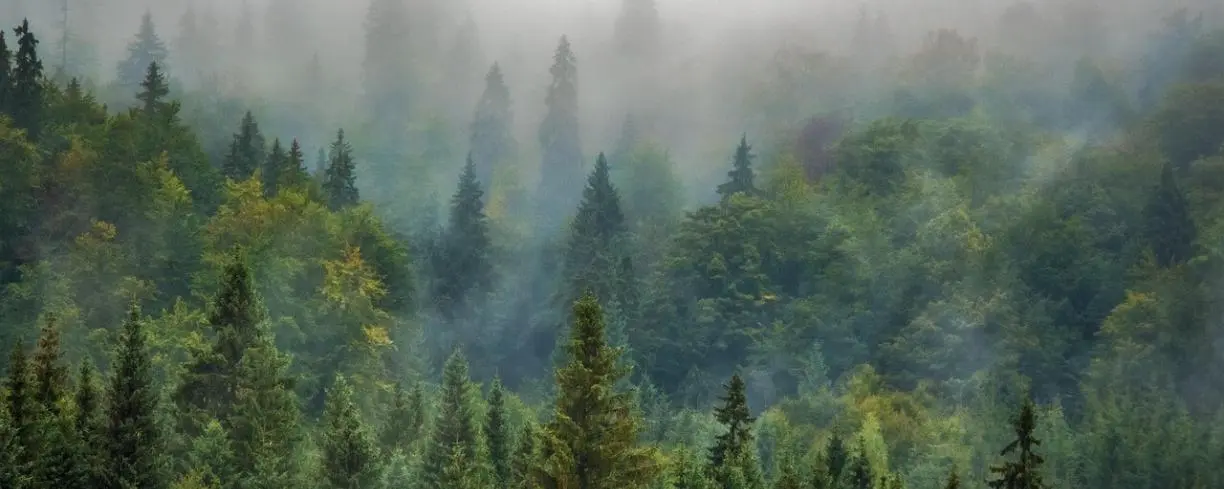
A study led by the Institute of Environmental Assessment and Water Research (IDAEA-CSIC) and the University of Helsinki, in collaboration with CREAF and the Barcelona Supercomputing Centre (BSC-CNS), has discovered that diterpenes, compounds emitted by trees, have a previously unconsidered impact on particle formation in the atmosphere. The work, published in Communications Earth & Environment, is the first to quantify the total emissions of diterpenes emitted by vegetation worldwide and their potential to form aerosols, which represents a modification of atmospheric models to date.
Diterpens are a type of terpene, volatile natural compounds emitted by plants that are essential for plant communication, pollination, and defense against herbivores. They are, for example, responsible for the characteristic “forest scent” after rain or on a hot day. Once in the atmosphere, terpenes react with other compounds such as ozone, giving rise to particles (also called aerosols). These aerosols affect air quality and respiratory health, reflect solar radiation, and act as seeds for cloud droplets.
This study represents a paradigm shift in our understanding of atmospheric composition, as until now, diterpenes were not considered key elements in aerosol formation.
"This study represents a paradigm shift in our understanding of atmospheric composition, as until now, diterpenes were not considered key elements in aerosol formation," says Ana María Yáñez-Serrano, a researcher at IDAEA-CSIC, research associate at CREAF and first author of the study.
YOU MAY ALSO BE INTERESTED IN
Aerosol formation
The reason diterpenes had not been considered in atmospheric models was because they were thought to be non-volatile due to their high molecular weight. However, thanks to more modern and powerful analytical techniques, the scientific team has shown that diterpenes are indeed emitted into the air in appreciable quantities and can contribute to aerosol formation. Laboratory experiments, using the diterpene kaurene, showed that they can indeed be rapidly transformed into particles upon reactions with ozone, with an efficiency of approximately 10 %.
“Around 10% of the kaurene released into the atmosphere can turn into aerosols. And based on what we know from atmospheric chemistry, it is very likely that other diterpenes form even more aerosols,” explains Mikael Ehn, professor at the University of Helsinki, who led the laboratory experiments of the study.
YOU MAY ALSO BE INTERESTED IN
Although diterpenes have always been present in forests, their role in the atmosphere has remained unknown until now. Knowing that they are volatile makes it possible to better understand how they influence air quality and climate, since their contribution to aerosol formation could affect predictions of air quality, cloud formation, and even future climate scenarios. For this reason, the auhors emphasise the need to include them in atmospheric and climate models.
Reference article: Yáñez-Serrano, A.M., Peñuelas, J., Jorba, O. et al. (2025). Unaccounted impacts of diterpene emissions on atmospheric aerosol loadings. Communications Earth & Environment 6, 636. DOI: 10.1038/s43247-025-02613-6
Press release authorship: Alicia S. Arroyo, IDAEA-CSIC Communication