Simple recipes to favor pollinators in Europe, the proposal of the RestPoll project


Bees, butterflies and hoverflies are some of the key groups of pollinating insects for agriculture, as these small organisms travel from flower to flower to feed and, in return, help them reproduce and produce fruits and seeds. Despite their importance, the increase in monocultures, the intensive use of pesticides and climate change, among other factors, put their survival at risk and are the cause of the worrying decline experienced by these insects in Europe. To reverse this situation, the European project RestPoll was born, which wants to implement and evaluate simple practices that benefit pollinator communities in various types of habitats, such as agricultural areas, vineyards and pastures. To do this, a variety of case studies have been launched in 16 European countries where habitats will be restored at the field, farm, landscape and regional scale. In addition, all actions will be carried out in a network with all the actors involved, including the scientific community, both from the side of ecology, agriculture or sociology, as well as farmers, managers and political agents.
The project, which began in 2024, is led by the University of Freiburg in Germany and involves 24 European entities, including CREAF and IRTA, which are leading the pilot activities in Catalonia.
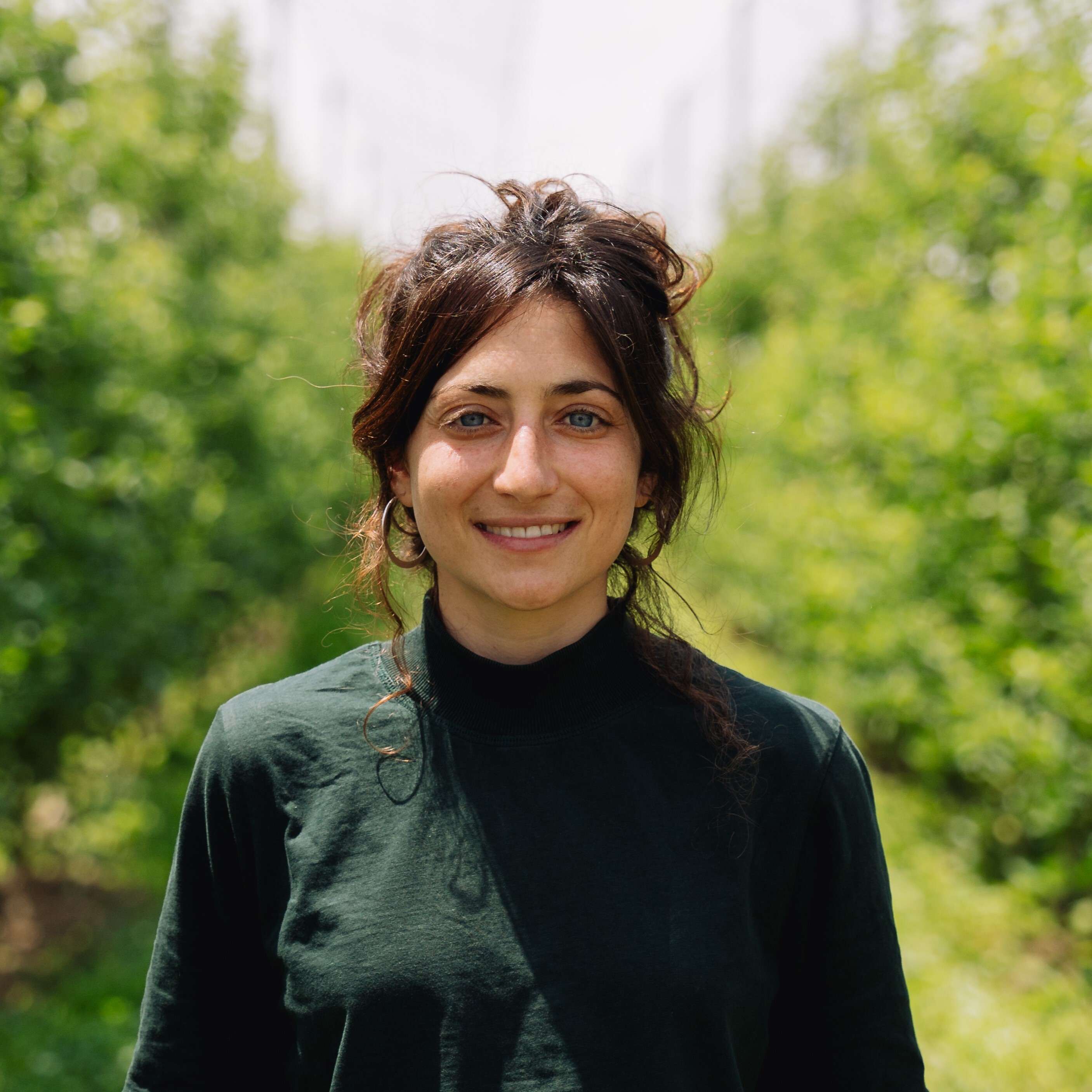
"We want our results to be a roadmap for creating restoration measures aligned with European pollinator protection strategies and, above all, taking into account the local context, the needs of the agricultural sector and scientific evidence to guarantee their success and applicability."
LAURA ROQUER , CREAF researcher and coordinator of restoration activities in Catalonia .
Living labs in apple fields
In the case of Catalonia, the CREAF and IRTA research groups are focusing on apple crops, where they have already begun to apply various restorative practices created together with farmers. “It's like working in an outdoor laboratory,” explains Roquer. Some examples are : planting floral bands on the edges and between rows of trees , which provide food and shelter for pollinating insects and connect habitats so that they can move; creating 'bee hotels' , which are spaces for solitary bees and wasps to nest and establish themselves in the fields year after year; and optimizing or reducing the use of pesticides to reduce insect mortality. “We also try to promote and preserve the native plants naturally present in the fields, such as Arugula ( Eruca sativa ), Marigold ( Calendula arvensis ), White Ravenissa ( Diplotaxis erucoides ), reduce the number of mowings and use alternative machinery that does not damage the floral resources of the field”, adds Roquer. All these measures are co-designed with the farmers and are adapted to the specific situation of each field , “the message we want to convey to them is that with simple measures you can greatly favor pollinators”, points out Roquer.
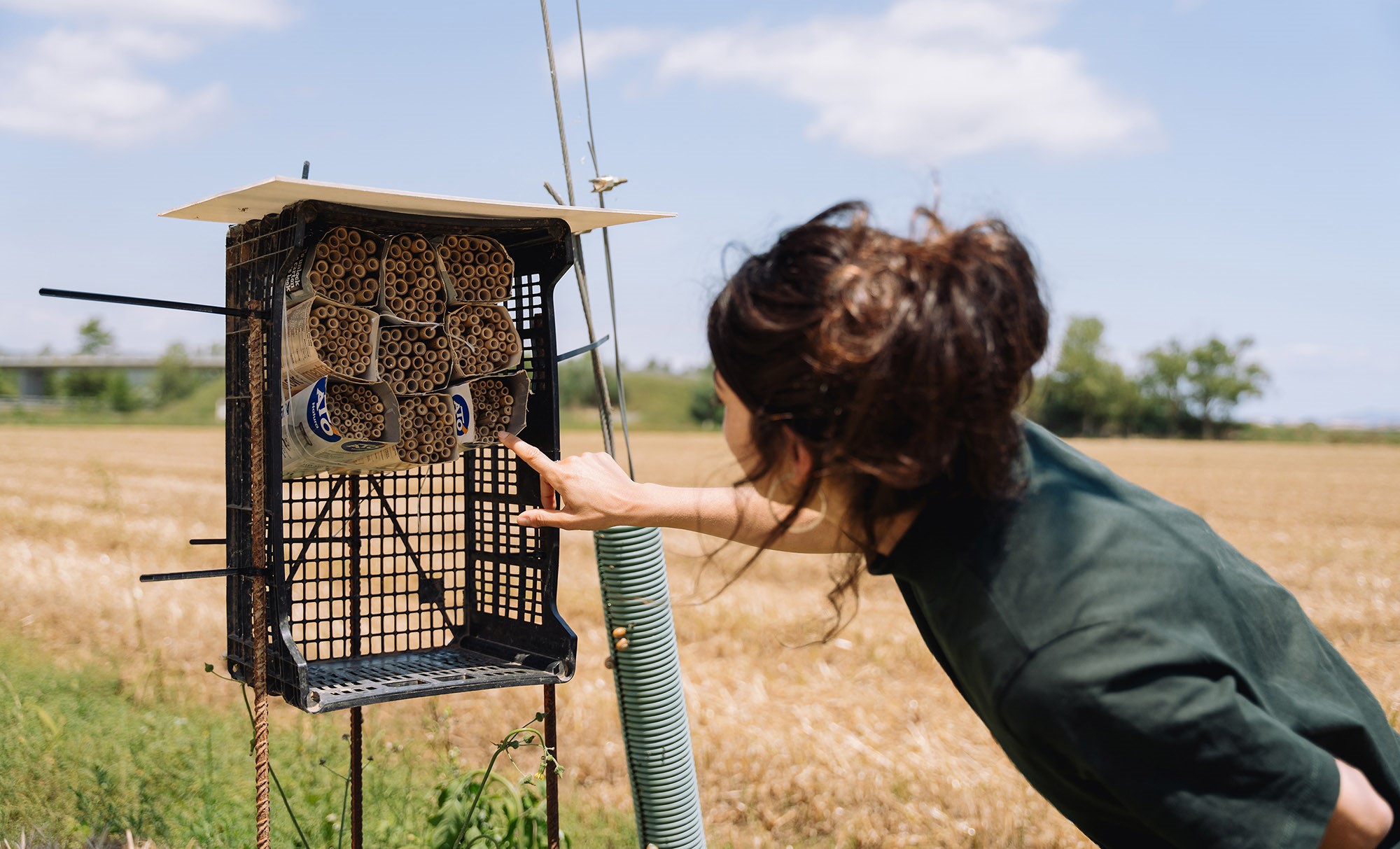
Laura Roquer inspecting a bee hotel installed in an apple field. Image: Galdric Mossoll
At the moment, 18 farms spread across the fruit-growing area of Lleida (12) and Girona (6) have joined the project, half of which will be subject to restoration measures and the other half to standard practices. In this way, when the project ends in 2028, the results of the restored plots can be compared with those of the plots where no action has been taken, with the aim of observing how pollinator populations have changed and their effects on fruit production and quality.
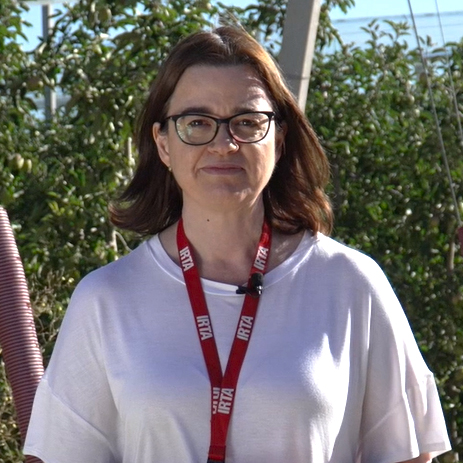
"In addition to evaluating the effectiveness of the techniques, we will also hold talks, training sessions and other activities throughout the project to explain both the importance of pollinators and practices that can be easily applied to apple orchards and other fruit tree plantations."
GEORGINA ALINS , IRTA researcher and member of the RestPoll project, who leads the knowledge transfer of the project's activities to the Catalan productive sector.
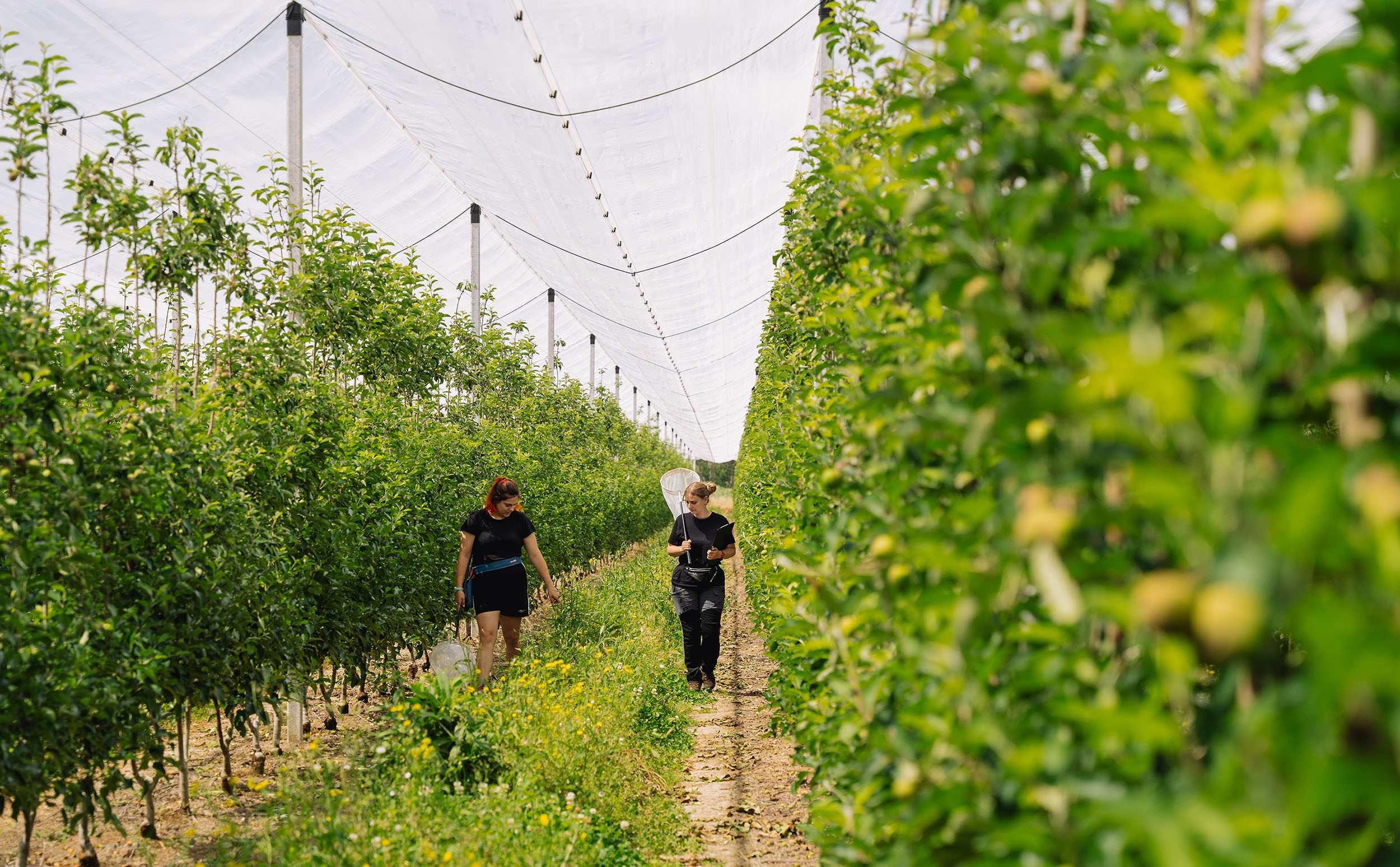
Field techniques of the CREAF pollinator team sampling an apple field. Image: Galdric Mossoll
Critical situation in Catalonia
According to the first report on pollinators carried out in Catalonia , this region has experienced population reductions in 70% of butterfly species, of which 45 diurnal species are threatened, 12 of them are already “in danger of extinction”, 32 are “vulnerable” and one is “extinct as a breeder”. The report points to the loss and fragmentation of natural habitats, the intensification of agriculture, urbanization, the closure of clearings in forest areas and climate change as the main causes. “Therefore, with the RestPoll project we will take another step forward to reverse this situation”, concludes Roquer. From CREAF, Jordi Bosch , Anselm Rodrigo , Iraima Verkaik and Clàudia Ortiz are also participating in the project. From IRTA, Néstor Felis, Glòria Àvila and Jordi Cabrefiga are also participating.
If you want to know more about the project and its news, you can visit its website , follow its social networks and subscribe to its newsletter !