
'The shock doctrine' generates a state that doesn't allow people to act, or read, or remember, or mobilize.
This year, our research team has begun working to recover a threatened plant, Plantago cornuti. It is so rare in Catalonia that it does not have an established common name, but we call it ‘plantatge cornut’ (in Catalan). This plant is threatened by the current context of global change, that is, by the set of changes that humans are causing and have caused on planet Earth.
The following figure summarizes the drivers of global change and its consequences.

Environmental violence, three main types
One of the major consequences of this global change is the extinction of all kinds of living beings, as is the case with Plantago cornuti, which we work with. The protected wetlands of Aiguamolls de l'Empordà is the only place on the Iberian Peninsula where this plant has been found, according to data collected in the red book of threatened flora in Catalonia written by Sáez et al. 2010. And according to the censuses we have carried out, we can say that in the last 15 years, almost 60% of the individuals of this species have been lost. This scenario of possible imminent local extinction has led us to begin population reinforcement efforts in collaboration with the public administration and entities with expertise in germination. So, in 2025, we planted new individuals in the field to help grow the known population of Plantago cornuti and thus try to improve its conservation status and prevent another extinction in the Aiguamolls de l’Empordà and on the Iberian Peninsula.

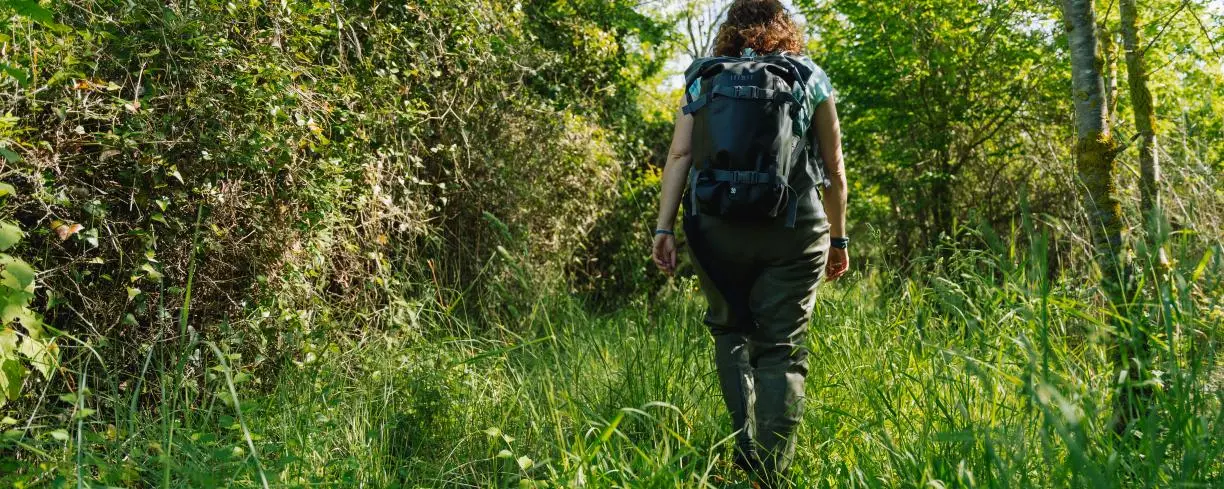
Plantago cornuti flowering and Sandra Saura Mas during fieldwork in July 2025, measuring the growth of specimens of this species. Photographs taken in the Aiguamolls de l’Empordà.
This plant is one of many endangered species of flora and fauna in the world. According to the latest IPBES report (2019), around one million species of animals and plants are threatened with extinction, many in the coming decades, more than ever before in human history. The average abundance of native species in most major terrestrial habitats has declined by at least 20% since 1900. More than 40% of amphibian species, nearly 33% of reef-building corals, and more than a third of all marine mammals have declined by 82% and rapidly since 1970 (IPBES 2019). Similar data have been reported in Catalonia, listed and disseminated in the latest report on the state of nature in Catalonia (Brotons et al 2020). The scientific community has been aware of and has evidence of this decline in biodiversity for years, and there are now several prediction models available on how some of these drivers of change can cause dire consequences. We can therefore move forward and find solutions based on these predictions. However, the global decline in biodiversity continues unabated.
After all, it can be said that global change is closely linked to environmental violence, understood as violence directed towards the environment, that is, the natural environment linked to the social environment, and therefore including humans. Violence can occur in many different forms, but all of them can be grouped into three main types of violence, according to the classification described by Johan Galtung (1969), one of the founders of research on peace and social conflicts, who expresses this through his ‘triangle of violences’:

Triangle of violences described by Johan Galtung (1969) Source: Wikipedia.
This triangle can be interpreted as an iceberg: at the visible part, at the very top, is the most visible violence, direct violence (verbal, physical, and/or psychological), and at the base, invisible but supporting the entire iceberg, the other two types of violence: structural violence, which focuses on the set of structures (social, economic, etc.) that do not allow for the satisfaction of basic human needs, and cultural violence, which creates a framework that legitimizes violence and manifests itself in attitudes and narratives that justify other types of violence. Galtung created this triangle in the context of violence in relation to basic human needs and therefore it is also valid for types of environmental violence, understood as violence against the natural environment in relation to the social environment.
Genocide and ecocide go hand in hand
After three days of fieldwork, on the last day we revisited the Plantago cornuti plantations to assess survival and growth, we and finally started the car for the drive home. As a way of reconnecting with the “human world” after three days surrounded mainly by other non-human species, we decided to listen to the news on the radio in the car, and I immediately shed tears inside and out when I heard about the atrocities of the genocide against the Palestinian people. I suppose my passion for nature, mixed with the news I hear, leads me to think about how species extinctions and ecocides have also been accompanied by the extinction of entire human populations throughout history. The genocide and invasion taking place in Palestine transports me to thoughts of the expulsion and genocide of the Tibetan people by China, the extinction of the Native Americans with the colonization of America by the Spanish, English, orand French, and other placescorners of the world full of cultural diversity that are no longer there. And without going any further, right here, the genocides carried out during the dictatorships of Hitler, Mussolini, and Franco. We remember the words of the Catalan writer Pere Quart (Joan Oliver) when he went into during the Spanish Civil War:
According to the latest ‘Alert’ report from the Peace Culture School (2024), there are 37 armed conflicts worldwide, a figure that has been on the rise in recent years. According to the same report, 114 areas of tension were identified worldwide in 2023, six more than in 2022, in line with the upward trend in the number of socio-political crises recorded in recent years. Furthermore, according to the SIPRI (Stockholm International Peace Research Institute) team, specifically Liang et al. (2024), global military spending in 2024 increased by 9.4% in real terms, to around $2.718 trillion, the highest global total ever recorded by this institution to date.

Graph showing conflicts and peacebuilding around the world. Source: School of Peace Culture. Alert 2024.

Graph showing global military spending (1988–2024). Source: Liang et al (2024) SIPRI.
I have been aware of this culture of war that ruins everything for years, which is why I also work on different fronts, such as researching how wars also cause major changes in ecosystems. We explain this very well in an article with Angham Daiyoub, a pre-doctoral researcher on the team with whom I have been fortunate enough to share the journey of supervising her doctoral thesis. In this article, Angham uses cartographic data and satellite imagery to show how 19.3% of forest cover has been lost during the Syrian war that began in 2011. The most affected areas are those closest to the most heavily bombed areas and also those closest to refugee camps, roads and highways.

(A) Map showing the extent of deforestation in Syria between 2010 and 2019, highlighting areas of forest loss. (B) Graph illustrating trends in forest and non-forest areas from 2010 to 2019, showing changes over the decade. Source: Daiyoub et al 2023
The NGO The Military Emission Gaps attempts to account for greenhouse gas emissions due to military spending and also to investigate the transparency and accessibility of this data. Energy use at bases and fuel use in the operation of military equipment, such as aircraft, naval vessels and land vehicles, are often considered the main contributors to military emissions. On their website, you can search by country on a map to see what emissions each country produces due to its military spending.
For years, the ICTA (Institute of Environmental Science and Technology) has been mapping environmental conflicts around the world through the EJAtlas project, and Angham, during the research we have done for her thesis, has also highlighted some of the main environmental conflicts caused by the war in Syria, such as: river pollution, the felling of olive trees, noise pollution, the illegal hunting of endangered gazelles, etc. Here you can find this complete research information.
When there is serious destruction of one or more ecosystems in such a way that the quality of life or peace of the inhabitants of the territory where it occurs is severely diminished, we can speak of ecocide. And this is what war entails in many parts of the world, as is also the case in the investigations we are conducting in Syria. The non-profit association Stop Ecocide International (SEI) has been campaigning for years to have ecocide classified as a serious criminal offence against humanity and peace at the International Criminal Court in The Hague.
Ignorance and dehumanisation are the basis of the culture of war and environmental violence. ‘The nobodies, who are not even though they are,’ as Galeano said in his poem ‘Los nadie’ (‘The Nobodies’): Mahmud, La Zhora, José, Isabel, the Montseny newt, the Seseli of Cap de Creus or the yew tree. If you don't know them, it's easier not to care about them and to be violent towards them.
As the popular saying goes, “If you know, you appreciate, and if you love, you protect”.
Peace is learned
When a people is wiped out, the associated war and violence also change the landscape, customs, species and ecosystems. Immersed in a Western system based on the culture of war, the debates we hear in politics and the media are almost always about what kind of army we should have, how or how much have to increase the military spending, who should have more nuclear weapons... But they often fail to report other facts, such as that in recent decades almost 2,500 atomic bombs have been dropped in nuclear tests, causing radioactive fallout, contamination and destruction of ecosystems (Fundipau, ICAN 2025). Nor do many people know that since the attacks on Hiroshima and Nagasaki, the Hibakusha – survivors of the atomic bombs – have fought for the abolition of nuclear weapons and called for support for the Treaty on the Prohibition of Nuclear Weapons (TPAN). Or that there is an NGO called ICAN (International Campaign to Abolish Nuclear Weapons) which was awarded the Nobel Peace Prize for its work towards the abolition of nuclear weapons at an international level. Or that Albert Einstein, together with Bertrand Russell, wrote the Russell-Einstein Manifesto in 1955, at the height of the Cold War, recognising the potential of nuclear weapons and calling for peaceful solutions to conflicts between countries.
Excerpt from the conclusion of the Russell-Einstein Manifesto:
“Given that nuclear weapons will certainly be used in any future world war, and that such weapons threaten the very existence of humanity, we call on governments around the world to understand and publicly acknowledge that their goals can no longer be achieved through world war and, consequently, that they must resolve any disputes between them by peaceful means.”.
The culture of war wants us to be memoryless, stressed and timeless, depressed and worried in a world full of supposed threats. Naomi Klein's theory is interesting, which calls this situation 'the shock doctrine', a doctrine of those who have more power to generate in the person with less powe, a state of shock that does not allow to act, or read, or remember, or mobilize. Along with other factors, the shock doctrine is also closely related to what is now called 'disaffected people', described as people without a conscience.
War generates a lot of money for a few companies and people with many interests, whether with the purchase and sale of weapons or with the reconstruction of cities and towns. This explains why we constantly hear much more about war in the media, and not about peace. Because it is these supremacist companies and people who also manage to create the dominant narratives through control of the mass media and thus try to direct humanity towards suicide and the culture of war.
'The shock doctrine' generates a state that doesn't allow people to act, or read, or remember, or mobilize.
Naomi Klein
‘Peace is learned’. This is the title of a new book by two experts in peace education, Marina Caireta and Cécile Barbeito (2024) and at the same time it is a key idea to be able to transform and move from the current culture of war of the Western system to the culture of peace. So if we want to transform, we need to learn, create and expand counter narratives of peace in the face of war and violence. There are different types of violence and there are also different types of peace. Here I present to you two types, according to Johan Galtung, which I mentioned before: positive peace and negative peace. The first understands peace not only as the absence of war but as the presence of basic needs covered and social and environmental justice. The second is based on the idea that there will be peace if there is an absence of war.
From positive peace I call to put not only human life at the center, but all life at the center. Be aware that we live in an ecosystem and that, therefore, humans are not alone and are part of a system of energy and matter flow and a network with many other species.
We have the tools, we just need to use the
We can fall into the false debate of whether change must come from above or from below. There is no doubt that changes need to be made from politics at the national and international levels, but while this does not happen, or happens so slowly that it is not useful, we must act from below to the extent that it is possible for us and our personal limitations allow us to do so. Because the people are the ones who decide, in a democracy that is not a fallacy.
Many actions can be taken from science. Below I present a list of inspiring proposals and experiences related to the current genocide in Palestine:
No collaboration with universities, research centers, companies, banks and countries that put war, armaments and violence at the center.
EXPERIÈNCIA:
The Palestinian Campaign for the Academic and Cultural Boycott of Israel (PACBI) was launched in 2004 to contribute to the Palestinian struggle for freedom, justice and equality. It advocates the boycott of Israeli academic and cultural institutions due to their deep and persistent complicity in Israel's denial of Palestinian rights under international law.
Collaboration with scientists and local populations in villages threatened by war and structural violence from a decolonial perspective
EXPERIENCE:
List of research centres or universities in Palestine related to ecological research:
| Biodiversity & Environmental Research Center (BERC) - Nablus | https://www.berc.ps/ |
| Biblioteca palestina de llavors tradicionals | https://viviensansour.com/Palestine-Heirloom |
| Bethlehem University - The Palestine Institute for Biodiversity and Sustainability (PIBS) and the Palestine Museum of Natural History (PMNH) | https://www.palestinenature.org/ |
| Nature Palestine Society | https://naturepalestine.org/ |
| Palestine Hydrology Group | https://www.phg.org/ |
| Lan Research Center | https://www.lrcj.org/en |
| UAWC - Union of Agricultural Work Committees | https://uawc-pal.org/publications-2/ |
Take a stand against the injustices of war and denounce them by acting as spokespersons through the media and communication channels to which we have access.
EXPERIÈNCIES

Promoting the learning of a culture of peace through education and counter-narratives in order to leave behind the culture of war.
There are many organisations in Catalonia working to educate for peace, and hundreds of books and teaching and educational resources have been available since the 1960s and 1970s (games, teaching units, educational websites, infographics, audiovisual materials, books, manuals, etc.). You will find many updated resources, for example, in the resources section of the website of the UAB School of Peace Culture or on the Edualter website. Specifically, you can also find a selection of educational resources for addressing the conflict between Israel and Palestine in this other section of the UAB School of Peace Culture website.
We have the tools, we just need to use them, to move from thinking to doing. To act.

Many small people, in small places, doing small things, can change the world.
Eduardo Galeano
I arrive home, tired from the field campaign, after hearing the news about the genocide in Palestine again, and I go straight to bed without dinner. I threw myself onto the bed, close my eyes and see the new Plantago cornuti plantations that we planted more than three months ago, and I smile as I remember that today we saw for the first time that some of them have started to flower. I refuse to let them become extinct because four wretches feel like it (as a song by Elèctrica Dharma says), and for now, they are still standing and increasing in number, thanks to the planting we have done. Finally, I fall asleep remembering a phrase I learned some time ago in a peace education workshop: not taking part in injustice is taking part, because it allows the dominant and unjust system to continue. I dream of a free, green and living Palestine.
LET'S MAKE PEACE, NOT WAR. LET'S PUT LIFE AT THE CENTRE.
References
- Barbeito Thonon, C., & Caireta Sampere, M. (2025). La pau s'aprèn: Com cultivar les relacions i les condicions per una escola pacífica. Editorial Octaedro.
- Brotons, L.; Pou, N.; Herrando, S.; Bota, G.; Villero, D.; Garrabou, J.; Ordóñez, J. L.; Anton, M.; Gual, G.; Recoder, L.; Alcaraz, J.; Pla, M.; Sainz de la Maza, P.; Pont, S. and Pino, J. (2020) Estat de la natura a Catalunya 2020. Departament de Territori i Sostenibilitat. Generalitat de Catalunya. Barcelona.
- Daiyoub, A., Gelabert, P., Saura-Mas, S., & Vega-Garcia, C. (2023). War and Deforestation: Using Remote Sensing and Machine Learning to Identify the War-Induced Deforestation in Syria 2010–2019. Land, 12(8), 1509. https://doi.org/10.3390/land12081509
- Escola de Cultura de Pau. Alerta 2024! Informe sobre conflictes, drets humans i construcció de pau. Barcelona: Icaria, 2024.
- Fundipau. 2025.
- ICAN (International campaign to abolish nuclear weapons). 2025.
- IPBES (2019): Summary for policymakers of the global assessment report on biodiversity and ecosystem services of the Intergovernmental Science-Policy Platform on Biodiversity and Ecosystem Services. S. Díaz, J. Settele, E. S. Brondízio, H. T. Ngo, M. Guèze, J. Agard, A. Arneth, P. Balvanera, K. A. Brauman, S. H. M. Butchart, K. M. A. Chan, L. A. Garibaldi, K. Ichii, J. Liu, S.
-Johan Galtung. 1969. Violence, Peace, and Peace Research. Journal of Peace Research. -Vol. 6, n.º 3 (1969), pp. 167-191
- Klein, N. (2007). La doctrina del shock: L'auge del capitalisme del desastre. Editorial Empúries.
- Liang, X., Nan, T., Da Silva, D. L., Scarazzato, L., Karim, Z., & Guiberteau Ricard, J. (2024). Trends in World Military Expenditure, 2024. SIPRI. SIPRI Fact Sheet. https://www.sipri.org/sites/default/files/2025-04/2504_fs_milex_2024.pdf
Thanks to Novact for the information about the networking and nonviolent action activities of the academic world organized to denounce the genocide in Palestine. And also to the UAB School of Peace Culture for everything I learn and have learned there, as well as for the Alerta! report and all the educational resources they create and disseminate without stopping, year after year.