A leading technology that accredits the quality of citizen science data, protagonist at the ECSA conference


WITH THE COLLABORATION OF:
WITH THE COLLABORATION OF:
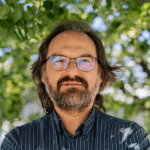
The Finnish city of Oulu has hosted the biennial meeting of the European Citizen Science Association (ECSA) in 2026. This conference is an unmissable event for the European community dedicated to citizen and participatory science from research, social entities or public institutions. On this occasion, CREAF was represented by researcher Joan Masó , from the Grumets group, who emphasized one of the most important technological challenges that citizen science has faced for years: knowing whether the data obtained by citizens are reliable and of sufficient quality.
Citizen science is a source of information that is increasingly recognized by public managers, but it has not yet been integrated into official territorial monitoring systems. This is because, in order to be used, for example, in crisis situations, it is essential to be able to demonstrate that the information is reliable.
At the ECSA conference, Joan Masó and Andreas Matheus from Secure Dimensions led a workshop where participants learned how to use a promising technology that uses blockchain to ensure the integrity of citizen science data. This technology is being developed in the context of the CitiObs and more4nature projects, inspired by previous work in the AD4GD project.

Joan Masó and Andreas Matheus during their presentation at ECSA 2026. Image: More4nature

For data to maintain its integrity, it must not lose information throughout its entire life cycle. This means that the data must retain its complete content, the estimate of its accuracy and the information about its origin while it is collected, processed and distributed. Integrity can be affected by manipulations, errors or undocumented modifications, which is why it is essential to have security measures that guarantee its reliability. The blockchain allows all this information to be stored in a way that it cannot be modified or lost under any circumstances. Thus, it can function as a very rigorous quality control that allows us to assess the degree of trust that the data deserves.
In addition, during the ECSA conference, Joan Masó participated in a round table together with Uta Wehn, coordinator of the more4nature project, in which they explained how more4nature uses a dual approach that considers both the technological part and the human and social variable to ensure that citizen science data is prepared, what is called the Data Readiness Level (DRL), to help in active decision-making about the environment and in verifying compliance with environmental policies.
YOU MAY ALSO BE INTERESTED IN
YOU MAY ALSO BE INTERESTED IN