Iceland is a natural laboratory for studying the effects of climate change on land


The Icelandic grasslands and the living beings that live there react very intensely to the increase in temperature during the first 5-8 years, but after more than 50 years the ecosystem returns to a stationary state more similar to the initial state. This is what recent research published in Nature Ecology & Evolution shows. This finding will help infer how climate change will affect the different ecosystems on Earth.
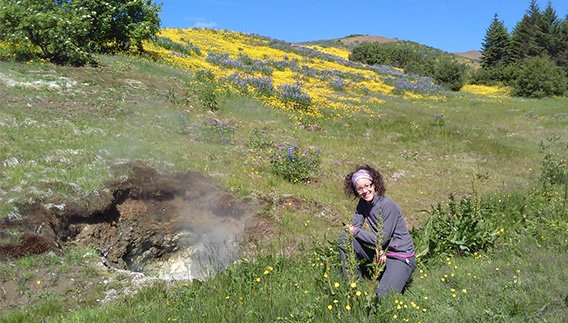
Climate change will warm the air, the sea, but also the land. Under our feet, key processes for our survival occur, the recycling of organic matter or soil fertility are examples. Today, the journal Nature Ecology & Evolution publishes the most comprehensive research on the effects of soil warming in the short and long term. The research was carried out by the ForHot consortium in Iceland. The consortium was formed in 2012 by a group of scientists, convinced that Iceland is the best European laboratory for studying global warming.
Nature Ecology & Evolution publishes the most comprehensive research available on the short- and long-term effects of global warming.
Among the scientists who make up the group and are co-authors of the study: Sara Marañón , Jordi Sardans and Albert Gargallo, researchers at CREAF , Josep Peñuelas, researcher at CREAF and the CSIC, and Mireia Bartons , researcher at the University of Vic – Central University of Catalonia (UVic-UCC) .
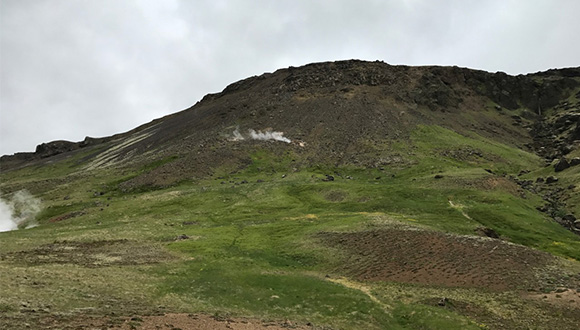
During their work, they observed that in the first years of soil warming, the ecosystem undergoes a super-reaction: the metabolism of microorganisms accelerates, carbon is released into the atmosphere and the composition of the soil changes. However, in the long term, it reaches a new equilibrium in which abrupt changes are no longer observed : the species of living beings are different or have adapted and, although there is a lower concentration of carbon, nitrogen and organic matter in the soil, the ecosystem has reached a new steady state .
In the first years of soil warming, the ecosystem undergoes a super-reaction: the metabolism of microorganisms accelerates, carbon is released into the atmosphere and the composition of the soil changes.
The researchers compared the effects of warming on 124 ecosystem elements representing different living organisms (plants, communities of microorganisms, fungi) and inert (soil composition).
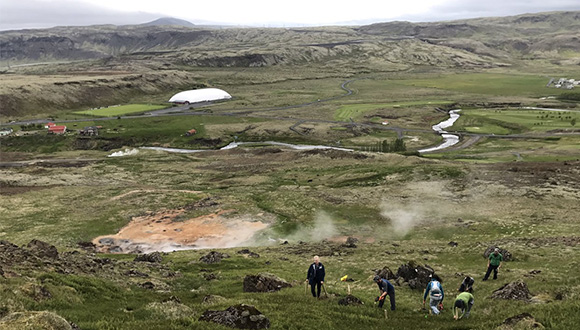
"One of the strengths of our study is that we have a consortium of researchers who study different variables in the same places : microbial communities, soil chemical variables, root biomass, nematodes, vegetation, the amount of carbon, among many other variables, compared to other research that focuses on a more limited amount," co-author of the study.
An area in Iceland allows us to observe the consequences of global warming in the short and long term
The research was conducted near Hveragerdi, in southwest Iceland. What is special about this place is that there is geothermal activity that causes the temperature on the ground to be between 0.5°C and 40°C, depending on the distance to the underground hot spots. This allows us to study how the increase in temperature affects the subarctic ecosystem.
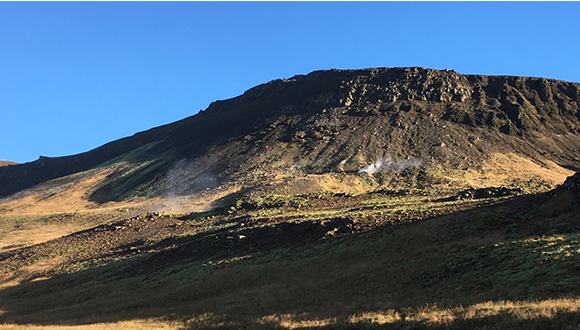
In addition, there are temperature gradients with different ages. On the one hand, there are soils that have evolved with these gradients for more than 50 years; on the other hand, an earthquake in 2008 generated new geothermal gradients in other soils. Thanks to this, the researchers were able to compare the effects of an increase in temperature on the soil ecosystem in the short term (5 to 8 years) with the long term effects (more than 50 years).
" The innovative thing about our research is that it allows us to observe changes in ecosystems over the very long term, and determine for the first time what adaptations the different elements and processes in the ecosystem undergo. This is extremely valuable," says Sara.
"Normally, experiments to measure the impact of soil temperature are not that old and rarely last more than 10 years. The innovative thing about our research is that it allows us to observe changes in ecosystems over the very long term, and determine for the first time what adaptations the different elements and processes in the ecosystem undergo. This is extremely valuable," says S.
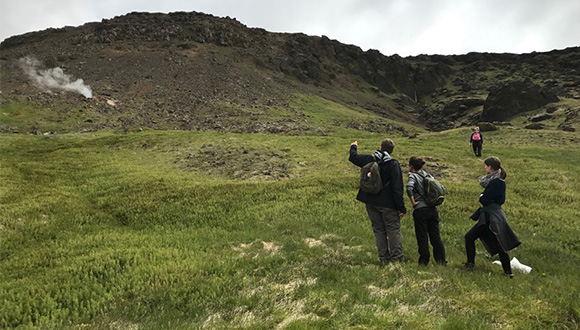
The key to this research is not to try to extrapolate the specific changes that take place in the various plant, microorganism and animal communities in this area to other ecosystems, but rather to identify the elements of an ecosystem that are most useful for predicting the effects of long-term climate change.
The research allows us to identify the elements of an ecosystem that are most useful for predicting the effects of long-term climate change.
"We cannot expect all global warming studies to last more than 50 years. In this context, our research provides a framework for understanding the changes that are triggered in the ecosystem in the face of this increase in temperature. In addition, it will make it easier for future research to choose the variables that, by studying them in the short term, allow us to better predict what will happen in the long term ."
Reference article:
Tom WN Walker et al. (2019). A systemic overreaction to years versus decades of warming in a subarctic grassland ecosystem. Nature Ecology & Evolution. https://www.nature.com/articles/s41559-019-1055-3