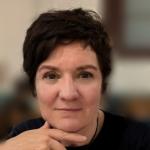

I need to stay closely connected to science to engage with it and show that the support we provide truly matters.

As the scientist responsible for CREAF's experimental infrastructure, Lucía Galiano's dedication is the final piece in a journey of fascination with knowledge. Along the way, she has completed a PhD at CREAF on drought-related forest mortality, where she has also worked as a qualified research technician, served as a pre- and post-doctoral researcher in Sweden, Germany, Switzerland and the United States, and taught at the Autonomous University of Barcelona. This path has placed her in a privileged position to understand and support the scientific team in their infrastructure needs, a task she attempts to tackle by combining empathy with her accumulated research experience. “Having a scientific background allows me to have a broad perspective, to immerse myself in the needs, to place the project's questions in their research context and, at the same time, to empathise with situations such as arriving from a field campaign at ungodly hours and having to organise all the material and samples”, she says.
Working closely with research staff and staying connected to scientific knowledge give meaning to her work, which she carries out with a team she admits to feeling “very proud” of, including a Xavier Altarriba, Meritxell Puig and Magda Pujol. Not to mention the prior coordination of the experimental spaces in which Marta Barceló participated.

The research infrastructure team coordinated by Lucía Galiano includes Magda Pujol, Xavier Altarriba and Meritxell Puig (from left to right). Image: Galdric Mossoll
"I need to work closely with the scientific team on a daily basis”, she says, admitting that this context is what makes her work truly rewarding. Closing ranks with the research staff is demonstrated in actions such as the one they have carried out with researcher Oriol Lapiedra, who together have obtained the licence that qualifies them as X-ray supervisors for X-raying lizard skeletons, issued by the Spanish National Security Council. "It's an opportunity to learn a little more, and I love it. It fills me with joy to see that all the management work we do serves to advance science", she says with a mixture of gratitude and satisfaction.
A major change
The substantial leap forward taken by the centre became clear when she rejoined CREAF in 2019, which was constantly growing and had new management and research lines. “I noticed a significant change in the number of projects and events going on, and that's why more space was needed for samples, instruments, field equipment, freezers, cold storage, -80º refrigerators, as well as more work protocols and operating regulations, because the entire system was overwhelmed”, she recalls. The first Severo Ochoa Award for Excellence in 2019 enabled her to launch an initial phase of improvements and, looking back, she admits that a lot of work has been done, although she is demanding of herself and says she would like “to do much more”.
I need to stay closely connected to science to engage with it and show that the support we provide truly matters.
Lucia Galiano
This first phase of improvements includes the renovation of the existing laboratories and the addition of three new spaces designed to support the consolidation of the centre's research lines, such as dendrology (headed by researcher Laia Andreu), animal ecology (led by Oriol Lapiedra), and paleoecology (directed by Sandra Nogué). "Infrastructure has improved, and that is good news", she says, noting that "the centre has space and facility constraints, which require us to work in networks, sharing experimental field sites and greenhouse services with other research centres or universities, and establishing collaboration agreements to share specialised laboratories". While she acknowledges that "this model helps optimise the research system, day-to-day laboratory work becomes more demanding, as it involves working across different locations".
In the medium term, she likes to imagine a CREAF with more ambitious experimental infrastructure, a consolidated team, and a more robust laboratory quality and safety system. She envisions the future incorporation of more sophisticated equipment tailored to its research lines, although she is convinced that today "the centre can feel proud of the improvements achieved, as it now has the basic infrastructure needed to support the science it promotes".
Science in the first person
Having the time to take part in a research project or a field campaign on site would represent, for her, a second turn of the circle and would fully give meaning to her vocation. It is a medium-term goal she has set herself to round out the service she provides to research. "For me, field campaigns are the most stimulating part, because that's where I ask myself the most questions about how nature works and what challenges we face. I also enjoy attending the CREAFTalks or PhD thesis defences, because I need to stay closely connected to science, to engage with it and make clear that the support we provide truly matters".
The phrase Lucía Galiano repeats most often is "I love doing science", throughout a conversation in which she acknowledges her deep curiosity and her interest in knowledge for its own sake. She is clear that she now holds a position that suits her well, one that allows her the dual perspective of living within a scientific environment while also contributing a sense of order and rationality in which she feels comfortable.