

We must opt for sustainable, climate-smart management that regards forests as sources of a vast range of other services besides timber production, such as soil protection, water cycle regulation, and habitat for flora and fauna.

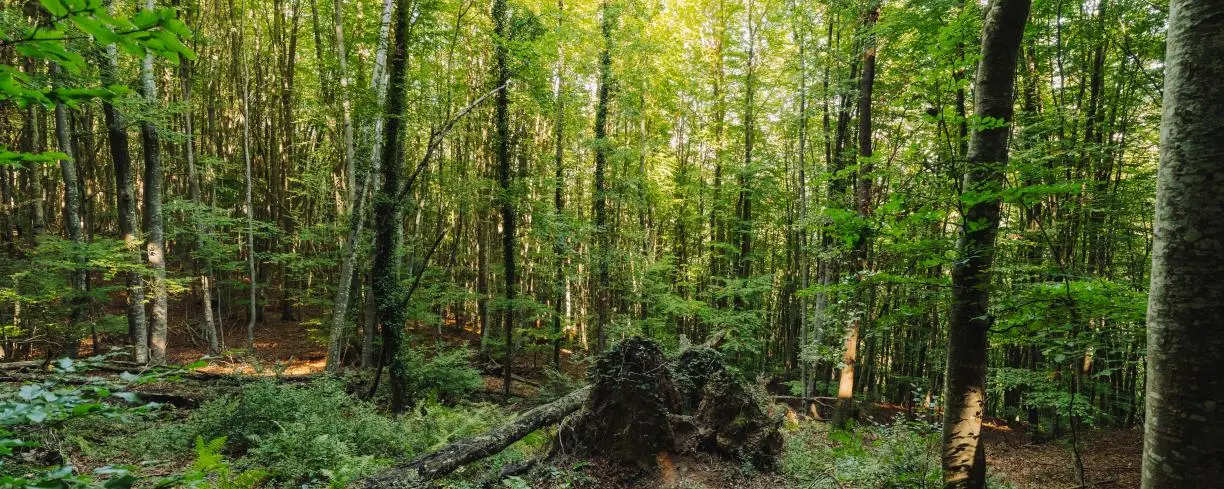
Forests are our allies in the fight against climate change, owing to their ability to absorb carbon dioxide (CO2) from the atmosphere and sequester it as carbon in soil and trees’ trunks, leaves and roots. At present, forests cover around 40% of the European Union (EU); between 1990 and 2022, they absorbed approximately 10% of the territory’s anthropogenic CO2 emissions. However, a recent study published in the journal Nature, led by Mirco Migliavacca from the European Commission’s Joint Research Centre and involving CREAF and the Spanish National Research Council (CSIC), warns that the carbon sequestration capacity of Europe’s forests is in decline. According to the EU’s Land Use, Land-Use Change and Forestry (LULUCF) inventory, which calculates the carbon sink capacity of forest land, wetlands and farmland (among others), Europe’s forest carbon sink recently diminished by almost a third in a single decade, with the average annual absorption rate falling from 457 million tonnes of CO₂ equivalent between 2010 and 2014 to 332 million between 2020 and 2022.
This situation is an obstacle to fulfilment of the EU’s climate goals, which call for the territory to be climate-neutral by 2050. As part of the EU’s roadmap, the revised LULUCF Regulation targets the removal of 310 million tonnes of CO2 equivalent by 2030. That objective may be unattainable, however, given the decline observed over the decade from 2010.
Multiple, interrelated causes: climate change and more
The factors behind the decline are diverse and, in many cases, interconnected. The main drivers identified in the study are increased forest harvesting, linked to growing demand for wood both in Europe and throughout the world; the increase in natural disturbances, such as fires, storms and pest outbreaks, which are often followed by premature harvesting to remove dead or burned wood; a fall in the rate of forest expansion, compared to several years ago, along with decreased afforestation; the ageing of forests, which reduces their capacity to grow and absorb carbon; and extreme heat and drought events, which curtail tree photosynthesis and productivity. The effects of these drivers can last for years, weakening forests and exacerbating tree mortality and losses in carbon sequestration capacity.

Development of the EU forest carbon sink and causes of its decline. Author: JRC
Reversing the trend: science, data, and smart forest management
In the light of the situation, the study’s authors have put forward a set of priority measures. First, they point out that it is essential to improve forest monitoring on a European scale and to have robust, continuous, harmonized data on the state of forests, their health, and different carbon pools, including forest soil. That knowledge is vital for improving mathematical models, as well as for developing effective policies and practical actions that will make it possible to restore forest carbon sinks and strengthen the resilience of forest ecosystems in the future.

Decline of carbon sinks: causes, solutions and aspects to consider. Author: JRC.
The study also calls for a profound transformation in the way European forests are managed, with objectives that go beyond merely producing timber. “We must opt for sustainable, climate-smart management that regards forests as sources of a vast range of other services besides timber production, such as soil protection, water cycle regulation, and habitat for flora and fauna,” says Josep Peñuelas, the study’s only Catalan author. “And there needs to be awareness that forests with more species and more varied structures — trees of different heights or diameters — are more resilient to climate change,” he adds.
Such an approach entails a balance between productive activities (e.g. logging) and the conservation of natural habitats. The study therefore advocates science-based management models revolving around forests that are diverse in terms of age and protection levels, where some areas are used for sustainable production and others set aside for strict conservation. Such diversification helps to protect biodiversity and retain carbon in different forest carbon pools, including living wood, deadwood and soil.
As for afforestation, the study remarks that great care will need to be taken when choosing where trees can be planted in the EU, as water scarcity will play a major role in determining the future of new forests. This means that afforestation will only be a valid solution in very specific locations with suitable climate conditions.
We must opt for sustainable, climate-smart management that regards forests as sources of a vast range of other services besides timber production, such as soil protection, water cycle regulation, and habitat for flora and fauna.
A past success now in jeopardy
Europe’s forest biomass has tripled since the 1950s, boosting its carbon sequestration capacity enormously. That progress is attributable to forests recovering after the overexploitation and deforestation that followed World War II; the expansion of forest area; improvements in forest management and conservation; and the impact of factors such as the increase in atmospheric CO2, which had a fertilizing effect for a time, and higher temperatures, which have led to longer growing seasons and greater nitrogen deposition. However, today’s climate crisis could undo the gains of the past unless urgent action is taken to reverse current trends.
Reference articlea: Migliavacca, M., Grassi, G., Bastos, A., Ceccherini, G., Ciais, P., Janssens-Maenhout, G., Lugato, E., Mahecha, M. D., Novick, K. A., Peñuelas, J., Pilli, R., Reichstein, M., Avitabile, V., Beck, P. S. A., Barredo, J. I., Forzieri, G., Herold, M., Korosuo, A., Mansuy, N., ... & Cescatti, A. (2025). Securing the forest carbon sink for the European Union’s climate ambition. Nature. DOI: 10.1038/s41586-025-08967-3.
AMB LA COL·LABORACIÓ DE: