The Water Framework Directive is the cornerstone of the EU's water policy and an instrument that has proven to be key to protecting rivers, lakes, wetlands and groundwater. These months we are faced with a fact that worries us, as the current geopolitical situation, with armed conflicts and changes in relations with some countries such as the USA, have put European countries on the ropes to gain sovereignty on key issues, one of them mining to access critical materials and rare earths. This is causing, once again, pressure to lighten some European environmental directives that allow resources to be extracted more easily, one of them is the Water Framework Directive itself, for which CREAF has urged not to modify it, a fact that could weaken it, and to strengthen its deployment. Because there is no room for doubt, freshwater habitats are essential to adapt our society to climate change, to protect biodiversity, to give us resilience to droughts and floods and to ensure water for both citizens and economic sectors.
In this case, the European Commission has proposed opening an internal process of revision of this directive with the intention of adding some exceptions that allow, among others, to establish mines in certain places (with the discharge of wastewater with high levels of pollution that entails, among other impacts). The sector argues that there are enormous difficulties in launching new exploitations of critical materials, because they must pass environmental impact assessments and maintain a living environment for the local population, a fact that puts the supply of these materials by the EU at risk. At the same time, extracting these minerals from Europe means that the environmental and social impacts that had previously occurred in other countries that supply the global market can now happen in our country.
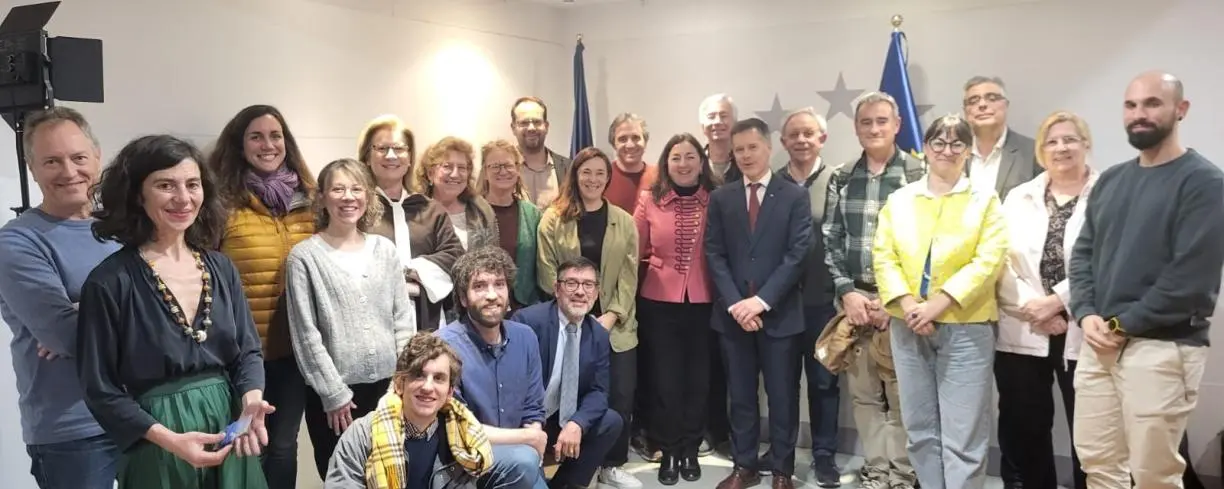
Before doing so, the European Executive has decided to launch the process of revising the Directive, which includes a call for the participation of social actors to give their opinion. Thus, CREAF researcher Annelies Broekman, from the Water and Global Change research group, the Director and the Area of Political Interaction and Institutional Relations of CREAF have attended a meeting with Clàudia Olazábal , Head of the Sustainable Management of Water Resources Unit of the Directorate-General for Environment of the European Commission to convey our voice and ask that the Directive be refrained from reopening to carry out the express reform, as this bypasses the established procedure for revising this Directive; it does not take into account that the evaluation of the WFD already concluded in 2020 that it was not necessary to revise it and is not accompanied by the necessary comprehensive analysis of the effects it would have, the impact assessment, something usual in the reform of any directive, among other important problems. On the contrary, CREAF has asked that full and effective implementation be prioritized.