The challenge of negotiating, tested through a role-playing simulation


A visit to CREAF by a scientific delegation from the Centre d’Étude de la Forêt (Quebec, Canada) provided the opportunity to conduct a simulation on what it means to negotiate from positions focused on science, political action, civil society and the economy. In this case, the challenge was to argue for the opportunity to promote a multinational company's energy project, which involves building facilities on forest land classified as ecologically sensitive. The media also played a role, as the news had been leaked.
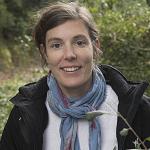
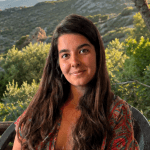
At the session held at CREAF, this playful exercise based on role-playing was led by Quebec researcher Isabelle Laforest-Lapointe and was inspired by the proposals of the International Network for Government Science Advice (INGSA), of which she is a member. It is designed as a participatory activity and explores INGSA's objective of informing public policy based on scientific evidence, from the local to the international level. Around twenty people took part, both from the Quebec delegation and from CREAF, which have maintained a scientific collaboration since Laforest-Lapointe studied for her master's degree in terrestrial ecology at the centre alongside researcher Mariona Ferrandiz.
Laforest-Lapointe explains that the simulation is intended to be “a pedagogical activity that takes participants out of their real-life context” to highlight that decisions and positions are generated on a grey scale and are conditioned by many variables. The young researcher conducts similar simulations as part of her involvement with the Canadian chapter of INGSA: “I feel I have a responsibility to put my knowledge and connections at the service of the community to which I belong, so that it has more tools to face the challenges posed by global change”, she argues forcefully. She points out that “everything related to terrestrial ecology and biodiversity management in Quebec is part of the population's identity”.
A delicate balance
A delicate balance
Professor Alain Paquette, a member of the visiting delegation, places the simulation exercise at a time of “profound political change” in Quebec with regard to forest management: “We have realised that people with political responsibility are not even aware that we in the scientific community are concerned about forest management”, he points out. He notes with some regret that “we should be aware that political action is unaware of the research we are conducting”. His final reflection is that science needs to devote resources and people to developing the capacity to inform political action.

The simulation on negotiating from positions focused on science, political action, civil society and the economy was led by researcher Isabelle Laforest-Lapointe and inspired by the International Network for Government Science Advice. Image: Alba Gimbert.
The Québec scientific group is completed by Morgane Urli, Yan Boucher, Carly Ziter and Olivier Villemaire-Côté, as well as Isabelle Laforest-Lapointe and Alain Paquette.
The role-playing scenario highlighted the complexity of the negotiating tables, as well as the fragility of multi-party agreements. In this case, the growth of a gas industry has consequences for the local economy and society, the national industrial fabric, the environment, geopolitical relations with neighbouring countries and the challenges of local political management. In this context, the media reinforce their informative and propagandistic role in the purest sense of the term. From her close ties and in her role as host, researcher Mariona Ferrandiz asserts that “collaborating with the Québec scientific team is a valuable opportunity due to their extensive background in urban ecology, a discipline with an increasing presence at CREAF”.
The city of Barcelona also welcomed the Quebec scientific team, who saw first-hand some urban interventions aimed at strengthening its green infrastructure through tree planting and climate resilience, based on research projects in which CREAF has been involved. They also visited areas where forest management is geared towards reducing the risk of fire and promoting a mosaic landscape. The visit is part of an initiative by the Quebec government to promote scientific exchange.
WITH THE COLLABORATION OF:
WITH THE COLLABORATION OF: