
The challenge of the project is to characterize the functionality of these ecosystems to understand how they respond to disturbances such as droughts, which are becoming more frequent and intense.


The tropical forests of the Congo Basin stretch from the Atlantic coast to the vast savannas of Central Africa. Covering an area comparable to half of Europe, they form the planet’s second green lung, only behind the Amazon. Yet, despite their immensity and ecological importance—among other things, they play a key role in climate regulation and are a biodiversity hotspot—they have been little studied scientifically. In this context, the CoForFunc project was born: an international initiative aiming to understand how these ecosystems function and how they respond to climate change.
One of the main locations for the research is Cameroon, where several experimental stations have been set up to study the tropical rainforest on-site. However, reaching them is no easy task: expeditions can last between fifteen days and a month and often involve hours of car travel and long treks through the forest to reach the study plots. It is there that a team composed of CREAF researchers Jordi Martínez-Vilalta, Rafael Poyatos, Lucette Adet, Oliver John Binks and Maurizio Mencuccini, has traveled several times as part of the project, together with other international and local teams.
The challenge of the project is to characterize the functionality of these ecosystems to understand how they respond to disturbances such as droughts, which are becoming more frequent and intense.
“The challenge of the project is to characterize the functionality of these ecosystems to understand how they respond to disturbances such as droughts, which are becoming more frequent and intense. We also analyze how their phenology is changing in response to rising temperatures and identify the diversity of tree species responses, among other objectives,” explains Jordi Martínez-Vilalta.
Measuring tree resistance
o understand how trees function and how resilient they are, the team analyzes several key traits such as wood density, linked to resistance to pests and fires; leaf water status, drought tolerance and stomatal behavior, which indicate how each species regulates water and CO₂ exchange; the capacity to store and release water in leaves and branches, crucial for surviving drought periods; and chlorophyll fluorescence in leaves, a biochemical indicator of the plant’s physiological state, among others. These data, together with continuous measurements of stem radial growth, are obtained through direct field sampling and are combined with drone observations, satellite imagery, and large international databases.

Photo of part of the CoForFunc project team in Cameroon.

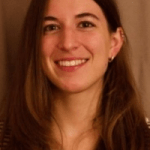
Lucette Adet, CREAF researcher in the CoForFunc project.

Researcher measuring tree parameters in the CoForFunc project.

Installation of a dendrometer. Author Pierre Ploton.

Photo of the CoforFunc project team in Cameroon.
To analyze the overall behavior of the ecosystems, the team has selected sixteen representative species that reflect the functional diversity of the tropical forest. Some species already identified as priorities due to their abundance and ecological role include Musanga cecropioides and Desbordesia glaucescens. Additionally, the research team compares locations with differences in water availability, from the most humid to the most drought sites.

Our goal is to understand how resistance and resilience strategies are distributed among species and how this may influence the future stability of the forest.
Science and outreach hand in hand
“The project not only aims to generate academic knowledge but also to raise public awareness about the importance of these ecosystems,” explains Lucette Adet.
For this reason, the researchers in the CoForFunc project framework are compiling a valuable visual archive, including aerial photographs captured by drones and videos that showcase the uninterrupted vastness of the rainforest. Although the results will take time to be published, the team is confident that this effort will help improve climate prediction models and guide conservation policies.