26/08/2026 News

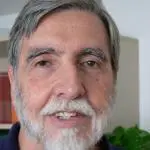
Pep Canadell, Ramon Margalef Ecology Award 2026, a global voice that makes CREAF grow

Communication Manager

Anna Ramon Revilla

I hold a degree in Biology (2005) by the Universitat Autònoma de Barcelona, and a Master in Scientific and Environmental Communication (2007) by the Universitat Pompeu Fabra. Since 2011 I

Biologist Josep (Pep) Canadell i Gili (Sabadell 1961), member of the CREAF International Scientific Committee, has been awarded the 22nd Ramon Margalef Ecology Prize 2026 , awarded annually by the Generalitat de Catalunya. The jury has recognized his pioneering contribution to the study of the dynamics, global carbon reserves and processes that regulate carbon exchanges on Earth, including those related to climate change, disturbances and land use changes.

The jury also highlighted a particularly relevant dimension of his career: his ability to promote and coordinate research teams from around the world and, based on this collective work, generate new ways of analyzing data on climate change. This knowledge, according to the selection committee, is particularly useful for decision-makers because it contributes to a better understanding of the role of nature in the climate and to designing measures to reduce the effects of climate change.

A global voice that makes CREAF grow

This ability to deploy global science, without losing the objective of contributing to decision-making, makes Pep Canadell's relationship with CREAF especially valuable.

Pep Canadell is part of the International Scientific Committee of CREAF , a consultative body that provides an external and international scientific perspective on the trajectory and evolution of the center. Within the framework of CREAF's periodic evaluations, the Committee assesses the progress achieved and formulates recommendations that help guide its evolution and strategy. But Canadell's contribution to CREAF goes beyond this formal role. His external perspective has helped us grow for more than 30 years and he is always available for any questions or contributions that we from CREAF ask him.

Joan Pino CREAF

We especially celebrate this recognition of Pep's enormous work, for himself and for what he represents for our institution. He has been a key factor in our scientific growth, for example leading the periodic evaluations of CREAF by the International Scientific Committee, and contributing his perspective to the definition of our Severo Ochoa projects, among others.

Joan Pino, director of CREAF

Pep Canadell is also one of the voices that helps CREAF cross borders: talking about our science and our research staff around the world, connecting us with the international scientific ecosystem and sharing an experience that allows us to look at the center from a perspective that challenges and inspires us. A way of thinking about science with purpose, from the local to the planetary scale, and that contributes to imagining what CREAF we want to build in the future.

Ecology, the most powerful tool he received from CREAF

Canadell's relationship with CREAF also has deep roots. Born in Sabadell in 1961, he studied Biology at the Autonomous University of Barcelona in the 1980s. There he discovered ecology and came into contact with Jaume Terradas, now Emeritus Professor of Ecology and a CREAF researcher.

In an interview published by CREAF, Canadell explained to what extent that training had been decisive in his career: "The Ecology that I learned at the UAB is perhaps the most powerful tool of all my studies to do what I do now globally." For him, the way of understanding ecosystems that he learned at that stage continues to be a fundamental tool for interpreting the major processes of the Earth system.

Jaume Terradas also celebrates this recognition: "It was a great satisfaction to know that the Ramon Margalef International Prize for Ecology has been awarded to Pep Canadell. This is a well-deserved recognition of a task that has been going on for many years, carried out at the highest level of global ecological research. In addition, Pep has always maintained his ties with Catalonia and with the UAB and CREAF, contributing his experience and prestige, and often his physical presence, whenever we have asked him to participate in an initiative."

Jaume Terradas CREAF

Pep is a universal Catalan. Margalef, who was also one, used to say that they gave him awards but he was not listened to. We hope that the same does not happen with Pep and that his voice is heard and helps to promote the ecological transition, that is, the decarbonization of the economy and the adaptation to climate change, which is necessary and urgent for our country. Pep would surely be more satisfied with that than with the honor that is now being bestowed upon him.

Jaume Terradas, founder of CREAF and honorary professor of Ecology at the Autonomous University of Barcelona.

After the UAB, he expanded his training with stays at Stanford University and the Smithsonian Tropical Research Institute in Panama . His career finally took him to Australia, where he is currently a principal investigator at the CSIRO Climate Science Centre and executive director of the Global Carbon Project , an international network of scientists that integrates knowledge about greenhouse gases and the global carbon cycle.

Canadell has also participated for more than two decades in the work of the IPCC and has developed intense activity to establish bridges between science and politics and between science and citizens.

A science that helps make decisions

This applied dimension of his career is precisely one of the aspects highlighted by the Ramon Margalef Prize jury. His research has not only contributed to a better understanding of how carbon circulates and accumulates on the planet. It has also generated tools and knowledge that allow us to interpret the evolution of climate change and support the decisions that need to be made to address it.

As he explained in his interview with CREAF, “the important thing with climate change is not to understand the problem, but to stop it”. His perspective focuses on the need to end CO₂ emissions and accelerate the transition to renewable energies, without forgetting the role of ecosystems and natural sinks in absorbing residual emissions. To make this possible, Canadell has been working for years on the development of Australia's carbon budgets, a reference document that has served as an example for many other governments to plan their decarbonization. This and other contributions led him to be named a member of the Australian Academy of Science in 2025, a milestone that CREAF also echoed . Surely his way of understanding science, rigorous, global and at the same time connected to the needs of society, is one of the traits that most inspires our way of doing things at CREAF. Congratulations Pep!