
It was a sense of purpose and relevance that attracted me to pursue a scientific career


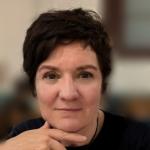
Scientist Pep Canadell's international authority on global greenhouse gas balances and the influence of human activity on the carbon cycle has earned him membership of the Australian Academy of Science. Canadell receives this global recognition after four decades of creating, training and leading interdisciplinary scientific teams to monitor the climate system. He is a member of CREAF's international scientific committee, executive director of the Global Carbon Project consortium and chief scientist at the CSIRO Climate Science Centre.
The Catalan scientist, who is based in Australia, has pioneered the study of the dynamics of natural sinks and global carbon reserves, as well as the biogeophysical processes that drive carbon exchanges on Earth. His research is a benchmark for global biogeochemistry and climate change assessments.
“I am proud that we have been able to develop comprehensive carbon budgets for Australia thanks to a large team of collaborators and overseas colleagues”, Canadell has said. “It has given me the opportunity to contribute to crucial scientific discussions, industry and business forums, and briefings to ministers to inform change. He also recalls that his interest in science evolved from curiosity to wanting to understand and contribute to solving environmental problems: “It was a sense of purpose and relevance that attracted me to pursue a scientific career”.
It was a sense of purpose and relevance that attracted me to pursue a scientific career
Pep Canadell
A measure of global change
The carbon budgets developed by the Global Carbon Project have become the global benchmark for all assessments of global climate change. "Given that natural CO₂ sinks remove more than 50% of human carbon emissions, gaining an in-depth understanding of their dynamics is as important for climate change projections as understanding human action”, he explained. “This work is very important to create comprehensive greenhouse gas emission accounts to inform global pathways towards climate stabilisation".
Pep Canadell's next steps are aimed at broadening horizons, as he explained upon being named a new member of the Australian Academy of Science. “I am looking forward to expanding my work and maximising opportunities by integrating satellite data, surface observations, and biospheric modelling to track changes towards net-zero. This will improve our understanding of the carbon cycle, climate systems and how they will change in the future".
YOU MAY ALSO BE INTERESTED IN