

Plants need a lot of water to develop their structures, and therefore, increasingly longer and more frequent droughts may mean that the early arrival of spring may not be as pronounced as expected globally.

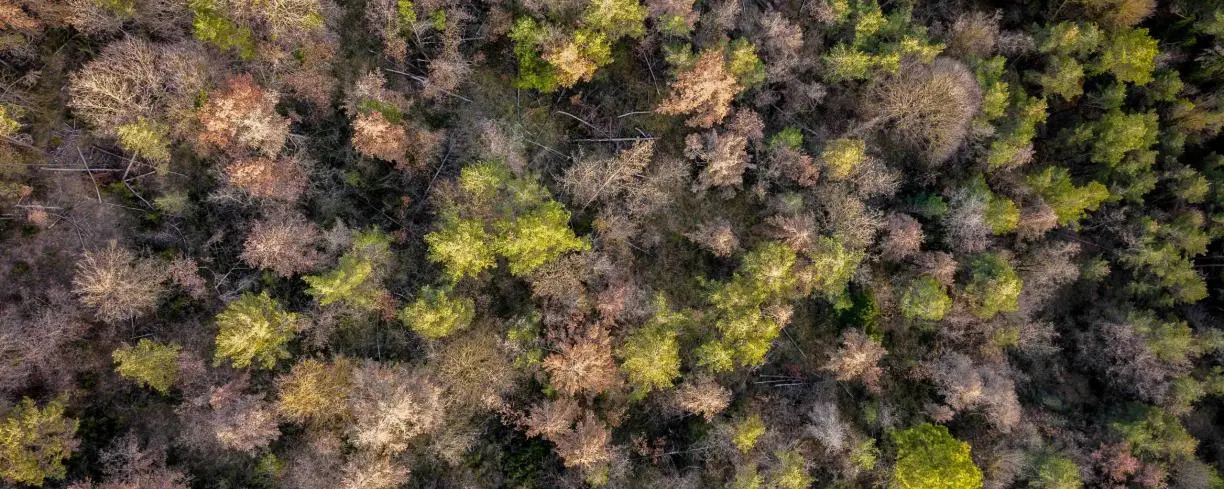
The increased frequency and intensity of droughts is a major threat. This is especially worrying in the Mediterranean, where persistent drought can cause forests to collapse. However, the effects of climate change and drought do not always feed off each other and go hand in hand. According to a research report that analyzed five different studies and was published in Nature Climate Change , the global rise in temperatures brings spring forward year after year, with the premature emergence of flowers and leaves, but during episodes of drought, this phenomenon is slowed and is not as evident. This publication, led by the Beijing Institute for Carbon Neutrality and with the participation of CREAF, shows that drought can delay the emergence of tree leaves by an average of 1.24 or 2.27 days in the northern hemisphere. It may not seem like much, but it is ten times longer than the average advance attributed to climate change .
The key is that both plants and the environment are affected after a drought . On the one hand, vegetation weakens, photosynthesis is reduced, and it takes longer to reactivate in spring. On the other hand, the soil retains less water, and if it doesn't regain sufficient moisture before spring begins, plants won't have the water they need to grow normally. This disrupts or unbalances the natural cycle of the seasons.

Temporal change in leaf emergence in a drought year compared to the previous normal year. Source: Liu, Y. et al.
“We have observed that external parameters, such as the lack of water in the soil, have a greater influence than internal changes in plants, such as the carbon assimilation of each species, when it comes to delaying flowering and leaf emergence, ” highlights Josep Peñuelas , CSIC researcher at CREAF and one of the authors of the study. Specifically, in arid areas, the influence of the environment is five times greater than that of internal changes in plants, while in humid regions it is only double. To obtain the data, the research team took into account variables such as soil humidity, environmental conditions and the characteristics of the plants studied and has seen that, depending on whether satellite observations or plant samples taken directly from the ground are taken into account, the delay can be greater or lesser.
Plants need a lot of water to develop their structures, and therefore, increasingly longer and more frequent droughts may mean that the early arrival of spring may not be as pronounced as expected globally.
"Plants require a lot of water to develop their structures, and therefore, increasingly longer and more frequent droughts may prevent the early onset of spring from being as pronounced as expected globally . However, one limitation of our study is the lack of practical experiments to monitor plant physiological processes during and after drought. "The next step is to measure this under different levels of drought stress and in different tree species," Peñuelas concludes.
In Catalonia, citizens can contribute to these studies.
In Catalonia, there is an observatory that also combines remote sensing records with direct data on changes in plant cycles; it's called RitmeNatura . This citizen science project, coordinated by CREAF in collaboration with the Meteorological Service of Catalonia, seeks to allow anyone to contribute photographs of plants and animals to detect when their cycles are out of sync. For example, in summer, St. John's wort, Sedum, and sunflowers, among others, are expected to flower, and some fruits such as peaches and apples are expected to finish ripening . These phenological processes will be recorded and monitored by RitmeNatura volunteers.
Both CREAF and the SMC complement their traditional scientific studies with these citizen initiatives that allow society to collaborate in the study of the effects of climate change on the natural calendars of plants and animals. In the case of RitmeNatura, it has collected more than 100,000 phenological observations in the last five years thanks to the participation of a network of more than two thousand volunteers from all over Catalonia. Furthermore, since the middle of last year, it has been promoting, together with the FenoCat network, the FenoRural project, which seeks to bring this way of participating in phenological studies to all corners of Catalonia. RitmeNatura invites any anonymous person to do their part by taking photographs of leaf emergence, flower opening, fruit ripening, or the arrival of migratory animals and sharing them through the iNaturalist platform. Specifically, observations must be posted on the project inaturalist.org/projects/ritmenatura .
IT MAY ALSO BE OF INTEREST
In Catalonia, there is an observatory that also combines remote sensing records with direct data on changes in plant cycles; it's called RitmeNatura . This citizen science project, coordinated by CREAF in collaboration with the Meteorological Service of Catalonia, seeks to allow anyone to contribute photographs of plants and animals to detect when their cycles are out of sync. For example, in summer, St. John's wort, Sedum, and sunflowers, among others, are expected to flower, and some fruits such as peaches and apples are expected to finish ripening . These phenological processes will be recorded and monitored by RitmeNatura volunteers.
Both CREAF and the SMC complement their traditional scientific studies with these citizen initiatives that allow society to collaborate in the study of the effects of climate change on the natural calendars of plants and animals. In the case of RitmeNatura, it has collected more than 100,000 phenological observations in the last five years thanks to the participation of a network of more than two thousand volunteers from all over Catalonia. Furthermore, since the middle of last year, it has been promoting, together with the FenoCat network, the FenoRural project, which seeks to bring this way of participating in phenological studies to all corners of Catalonia. RitmeNatura invites any anonymous person to do their part by taking photographs of leaf emergence, flower opening, fruit ripening, or the arrival of migratory animals and sharing them through the iNaturalist platform. Specifically, observations must be posted on the project inaturalist.org/projects/ritmenatura .

Oak leaves beginning to sprout. Source: Clàudia Fernández (RitmeNatura Volunteer)
Article : Ying Liu, Yao Zhang, Josep Peñuelas, Steven A. Kannenberg, Haibo Gong, Wenping Yuan, Chaoyang Wu, Sha Zhou & Shilong Piao. Drought legacies delay spring green-up in northern ecosystems . Nature Climate Change. https://doi.org/10.1038/s41558-025-02273-6 (2025)
AMB LA COL·LABORACIÓ DE: