

The project represents a key step towards smarter and more resilient management of urban green infrastructure in Barcelona


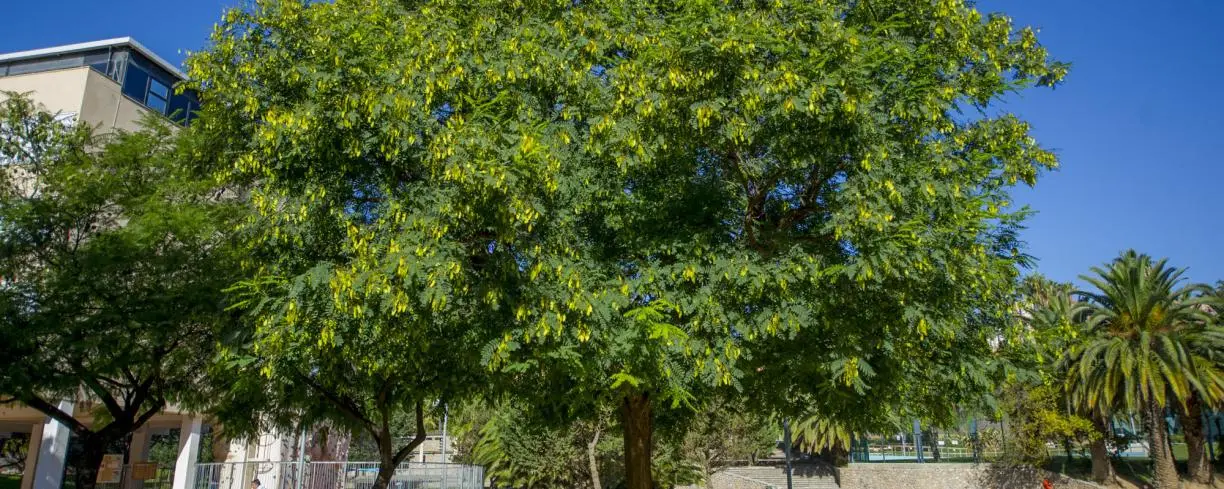
Green spaces in cities have become established as a key element in adapting large cities to the effects of climate change. However, trees are living beings that also suffer directly from lack of water, poor soil quality or heat, and can only play this protective role if they are kept in good health. In this context, the ARSEC project was born, which aims to analyze precisely how climate change affects Barcelona's urban trees. The results will allow, among other things, to optimize irrigation, improve soil quality and evaluate which species are most suitable for planting . The project is led by CREAF, and the Department of Plant Biology, Animal Biology and Ecology (BABVE) of the Autonomous University of Barcelona (UAB) and Barcelona Regional participate in it, and is funded by Barcelona City Council and the ”la Caixa” Foundation through grants from 'Research and Innovation 2025'. The research team leading the initiative was formed in response to a need identified by the Barcelona Municipal Institute of Parks and Gardens, together with the Climate Change Office of the Barcelona City Council, to improve the management of urban trees.
The project represents a key step towards smarter and more resilient management of urban green infrastructure in Barcelona
Mariona Ferrandiz, CREAF researcher and UAB professor
Specifically, the initiative focuses on three species that are very present in the city: banana trees, tipuan trees and linden trees; and on three types of urban environments : parks, avenues and narrow streets. In total, sensors of various types will be installed on 45 trees, dendrometers will be the sensors responsible for measuring their growth every 15 minutes, and others will measure the temperature and humidity of the soil and air. This system will allow episodes of stress due to heat or lack of water to be detected in real time.
But apart from analyzing the present, the team will go further and analyze tree rings to reconstruct their growth over the last 50 years , using dendrochronology techniques and the study of stable isotopes.

This information will help to understand how different species have reacted to droughts and temperature changes over the past few decades and, therefore, to know their capacity to adapt.
Laia Andreu-Hayles, researcher at the Catalan Institution for Research and Advanced Studies (ICREA) at CREAF and project coordinator
Involve citizens
Another of the project's pillars is to encourage citizen participation in the monitoring and care of urban trees. This will be done through a program of training days, workshops and educational materials aimed at schools and local entities. The aim is for them to learn how to measure the diameter of the trees in their environment and record their evolution over time. This data, collected periodically, will allow the scientific information base to be expanded and complement the measurements obtained with the sensors.
All the data will be integrated into an interactive viewer that will allow the municipal services and Parks and Gardens of the Barcelona City Council to visualize the state of health of the trees and make decisions based on scientific evidence in a context of water stress and growing climate emergency, "we believe that it is a very pioneering project and responds to a specific need that the municipal services have been requesting for some time", explains Ferrandiz.
One of the 13 winning projects
The ARSEC project is one of 13 projects awarded by Barcelona City Council and the ”La Caixa” Foundation within the framework of the 2025 call for grants aimed at financing research in the city with up to €2 million. The winning initiatives have been selected from 77 proposals.
The awards are given every two years and the ceremony, which took place on January 27th at the Saló de Cròniques of Barcelona City Council, was chaired by the fourth deputy mayor and head of the Science and Innovation area, Jordi Valls. It was also attended by the deputy general director of research and scholarships of the ”la Caixa” Foundation, Àngel Font.
This is the fifth edition of this biennial call, the result of the collaboration between the city council and the Foundation, which seeks to promote research projects in areas such as community health, the digitalization of the city, the climate emergency or sustainability to address the city's urban challenges. The initiative also aims to contribute to the collaboration between consolidated research entities that work together, promoting synergies between research centers, third sector entities and the city's economic and social fabric to develop applied research in strategic sectors.
"We are very pleased that our project has been selected in second place in the sustainability and climate change category due to the city of Barcelona's commitment to this emerging line of research," the researchers highlight.


YOU MAY ALSO BE INTERESTED IN

Butterflies in the city: science, management and citizenship for a greener Barcelona
In addition, the call is part of the Strategic Plan for Science and Innovation 2024-2027, designed to strengthen research in the city and support scientific careers in Barcelona and its metropolitan area, which is already a leader at a national and European level in scientific production.
Also participating in the project, among others, are CREAF and UAB researcher Xavi Domene, who leads the soil quality analysis part, and Joan Pino, director of CREAF and UAB professor, who has been providing scientific advice to Barcelona City Council for years to move towards a greener, more sustainable city full of biodiversity.