23/09/2026 Opinion

CREAF publishes a new strategy to accelerate its impact and contribute more and better to environmental problems

Research Impact officer

Anabel Sánchez Plaza

CREAF’s findings drive action, inform decisions, and address environmental challenges through impact-focused, accessible science—an approach the Impact Office at CREAF actively promotes.

WITH THE COLLABORATION OF:

We are experiencing it firsthand, the environmental crisis is accelerating and is affecting us especially in the Mediterranean basin. Given this, it is urgent that CREAF does not stop and provides knowledge and solutions to reverse this situation. How? It seems like an easy circuit: CREAF experiments and creates knowledge or tangible tools that benefit nature or people, makes these results available, society adopts them and little by little we make progress in solving the environmental crises in our territory. But no, it is not so obvious. Science and society do not yet have this circuit well-connected and the decisions that are made are often not yet sufficiently based on science. For this reason, CREAF is working to improve its impact and make this journey a reality. To do this, it has published the Research Impact Strategy 2026–2030 , a renewed edition that will be the institutional framework to guide this path and that research, social actors, politics and citizenship go hand in hand more than ever. According to CREAF's vision, impact is any demonstrable change generated thanks to research and that occurs outside the academic world, whether in public policies, territorial management, professional practices, citizen awareness or ecosystem health.

This new stage is not an isolated action, but is based on the learnings of the first strategy (2021-2025) and coincides with research evaluation reforms that are currently being carried out around the world. That is why the new strategy also aligns with initiatives such as CoARA or incorporates some elements of the new impact model of the Generalitat de Catalunya. In general, this strategy is a shared and transformative vision that seeks to consolidate and promote a culture of "healthy" impact.

Anabel Sánchez CREAF

The vision for 2030 is that we have achieved to be a center where impact is not an added responsibility, but an integrated dimension of research and institutional culture. The aim is for research teams to incorporate the perspective of social actors from the beginning of projects and work together to identify needs and ensure that knowledge is truly useful and usable.

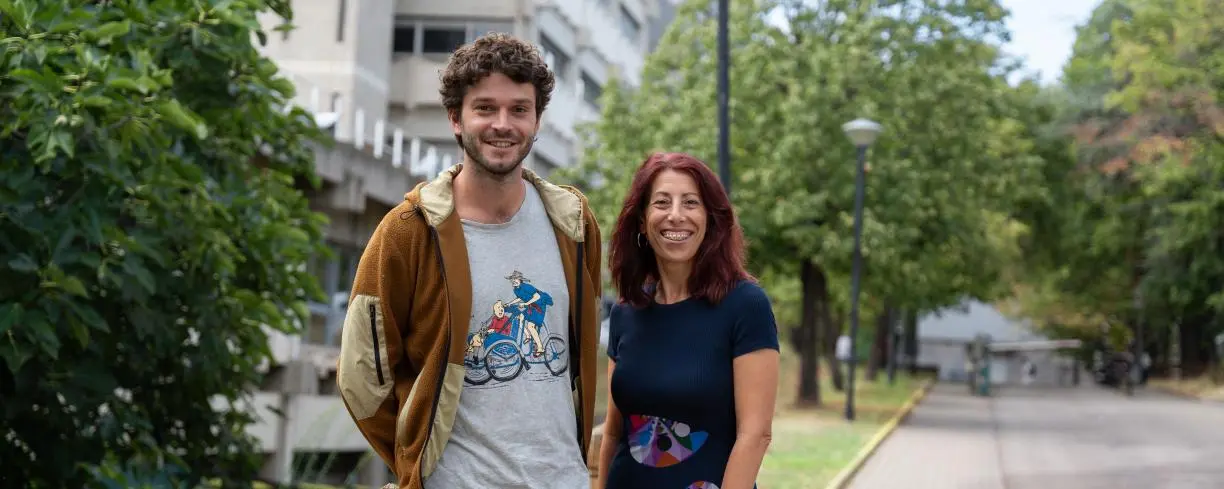
Anabel Sánchez Plaza, head of the CREAF Impact Unit

To make this a reality, the strategy is structured around five key strategic objectives:

  • Strengthen the culture of impact as an institutional value.
  • Promote learning and capacity development around impact.
  • Strengthen participation and mobilization of knowledge as well as dialogue and mutual learning with society and citizen science.
  • Improve the monitoring, visibility and communication of the benefits of CREAF research.
  • Consider impact from the beginning in research proposals and projects.

All of them must improve the impact of CREAF in three areas . In the internal area, offer more specialized support within CREAF, new training opportunities, tools for impact planning and more structured support to incorporate this dimension into projects or promote interaction initiatives with social actors and citizens. In the area of the research system , one of the objectives is to contribute to the Catalan research system, and also align ourselves with the initiatives that are underway at both the state and European levels. On the other hand, we also want to contribute to the development of new practices for responsible research evaluation that incorporate the impact in Catalonia, Spain and Europe, aligning ourselves with initiatives such as CoARA, DORA. Finally, facing society , we hope that they perceive that the research carried out at CREAF is increasingly open, accessible and committed, with results that better respond to their needs thanks to co-creation processes where citizens, NGOs and administrations actively participate in the research.

Oriol Daura, CREAF

The strategy reminds us that impact is about relationships. It is the result of working together with administrations, NGOs, the private sector, professionals and citizens to ensure that research is relevant, accessible and usable.

Oriol Daura, technician from the CREAF Impact Unit

In fact, thanks to the impact stories of the previous strategy, we try to explain these examples. A few months ago, we published a story that talked about the implementation of new techniques for the restoration of degraded mining soils that have allowed many degraded habitats in Catalonia to be recovered thanks to a collaboration of more than 30 years with the Generalitat de Catalunya. Cases like this show how the generation of knowledge, combined with relationships of trust and interaction and continuous work with social actors, ends up translating into real changes in the territory.

A new research impact monitoring system

Far from limiting itself to counting impacts once they have occurred, CREAF's new impact strategy aims to launch a tool to follow the journey that scientific knowledge takes from the time it is generated until it contributes to real changes in society. The system will record activities, collaborations with administrations, companies, NGOs or citizens, research products, intermediate results and the evidence associated with these changes. In this way, CREAF will be able to better understand how impact is built, identify successful experiences and give greater visibility to the social and environmental benefits generated by its research. At the same time, it will also make it easier for research staff to collect and value contributions that often fall outside traditional academic indicators, such as co-creation processes, advice, participation in public policies or capacity development.

Impact accelerator

One of the star actions of the new strategy will be the Impact Acceleration Program, a call for seed funding designed to support those activities that are often essential to generate impact but that fall outside the usual budgets of research projects. The program will finance actions such as co-creation workshops with public administrations, social entities or companies, the joint development of guides and recommendations, training activities or pilot tests to test the application of research results in real contexts. The objective is to provide CREAF teams with the time, resources and flexibility necessary to build solid relationships with social actors and to promote scientific knowledge reaching where it can be most useful and transformative.