
The mission of CREAF in this COP (as in the other two) is to contribute its scientific knowledge whenever possible and to open doors so that science can contribute to decision-making, in this case, for the fight against desertification


In 2026, CREAF set out to advance its strategy of bridging science with public policy and environmental science diplomacy by becoming an observer entity for the three key United Nations environmental conferences—collectively known as the ‘Rio Trio’ (originating from the 1992 Rio Convention): the Climate COP organized by the UNFCCC, the Biodiversity COP organized by the CBD, and the Desertification COP organized by the UNCCD. Given that the Climate COP takes place annually while the other two are held biennially, the three conventions coincide only every two years; 2026 presented an opportunity that CREAF was keen to seize.
The Desertification COP17 was held in Ulan Bator (Mongolia) from 17 to 28 August 2026 and is the COP17 for the Fight against Desertification. On behalf of CREAF, Anna Carles, CREAF international relations technician who works in the Institutional Relations and Political Interaction Area, participated. The convention, which this year defended the slogan 'Restoring the land, restoring hope', had the participation of 197 countries, research centres, companies, associations, NGOs and local people. The purpose of CREAF at this convention was mainly to prospect, to see how the smaller and unknown conference of the United Nations works, to understand its role in relation to the other two, to make connections with key players in the field of desertification and to see opportunities where CREAF science can be useful.
The mission of CREAF in this COP (as in the other two) is to contribute its scientific knowledge whenever possible and to open doors so that science can contribute to decision-making, in this case, for the fight against desertification
Alícia Pérez-Porro, Head of Political Interaction and Institutional Relations
The science behind the negotiations
Both the Climate and the Biodiversity COPs’ have specific bodies that provide scientific evidence in the form of reports. These documents serve as a crucial foundation for the negotiations held by countries during the conventions. For the climate COP, this role is played by the renowned Intergovernmental Panel on Climate Change (IPCC), which produces assessment reports every six years alongside other thematic or methodological reports. In the case of biodiversity, the task falls to the increasingly significant Intergovernmental Science-Policy Platform on Biodiversity and Ecosystem Services (IPBES), which also produces global assessment reports and other thematic studies.

During this COP, we wanted to gain a deeper understanding of the scientific advisory methodology used by the UNCCD to make decisions on soil and desertification issues, given that it lacks an intergovernmental panel in the strict sense.
Anna Carles, Policy Engagement Research Technician
Discussions with the organization confirmed that scientific advice reaches them through a specific science-policy interface; this body produces reports upon request and issues calls for new scientific members based on the specific report being prepared. They are not a panel, as they have a simpler structure and lack such an exhaustive review process," notes Anna Carles. "Our next step will be to contact some of the authors and assess the possibility of CREAF experts joining the group, should they wish to do so," she concludes.
MONALISA: From Europe to Mongolia
One of the highlights of this first visit to a UNCCD COP was the opportunity to participate in a side event. While the core of any COP consists of negotiations between governments regarding a shared, pre-agreed agenda, there are also public spaces hosting events centred on the proposed themes—offering a chance to influence and share knowledge with attendees. CREAF participated in an event organized by the European project MONALISA, of which it is a partner. Launched just a year ago, the project aims to test various strategies to combat desertification in Europe. The pilot case involving CREAF focuses on testing technologies to halt the decline of Spanish ‘dehesas’ (wooded pastures) in Extremadura—specifically in the Los Pedroches area—and to ensure the survival of this key ecosystem in such an arid environment.
Connections to tackle drought
This European connection in Mongolia led to valuable contacts with Italy and France—countries with which we share desertification-related challenges, particularly in the Mediterranean region. Regarding the Spanish delegation, attending the COP allowed us to strengthen ties with the Ministry for the Ecological Transition—with whom we collaborate extensively on biodiversity issues—as we explored the possibility of contributing our scientific expertise on soils through the International Drought Resilience Alliance (IDRA). IDRA is a global coalition of countries originally spearheaded by Spain and Senegal during the COP27 climate summit in November 2022. Its primary goal is to prepare the world for a future of increasingly severe droughts—a subject on which CREAF can provide a wealth of relevant information.

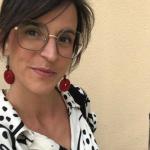
Anna Carles participates in the three key United Nations environmental conventions known as the Rio Trio. Image: Anna Carles

Anna Carles at COP17. Image: Anna Carles
Stalled negotiations
Regarding the negotiations themselves, CREAF monitors their progress, shares this information with its collaborative partners, and stays up to date on the status of the issues. At this COP, however, the main development so far has been that Russia and the USA -among other countries- have obstructed the agenda presented by the secretariat, bringing it to a complete standstill. The agenda was set to cover a wide range of topics with representatives from 197 governments, including gender issues, synergies with other crises, financing, and -crucially- tools for informing policy with scientific data. "All these topics have been blocked, and they remain so today. We are leaving now, but we hope the situation is resolved in the coming days; we know the EU has made significant efforts to unblock the agenda, but those efforts have been in vain. What happens here will impact the next two COPs, raising the possibility that similar situations could arise again," concludes Anna Carles.
YOU MAY ALSO BE INTERESTED IN
A different kind of COP
Finally, we look at the atmosphere in Ulan Bator to gain a better understanding of this convention. "The atmosphere at this COP is much more relaxed than at climate negotiations—which are far more stressful and politicized—and less technical compared to biodiversity summits; the focus here is more on improving operations and finding the most useful framework to make the convention increasingly relevant. Furthermore, unlike other COPs, African and Asian countries predominate here, which also changes the atmosphere," notes Anna Carles.
Overall, CREAF views this initial experience very positively; once the three COPs have concluded, it will enable us to adopt an increasingly holistic and global perspective. We aim for our science to become ever more useful, which requires considering the interconnections between issues and proposing solutions that simultaneously address all three global challenges.
The unprecedented environmental crisis currently affecting us is, in fact, a combination of distinct crises—the climate emergency, biodiversity loss, pollution, and so on—that are interconnected and interrelated. While it is understandable that these issues are addressed separately from a political standpoint, from a scientific perspective we cannot focus on just one; instead, we must view them as a system. For this reason, CREAF will henceforth maintain a presence at and monitor the three main international environmental governance processes. This approach allows us to provide a consolidated scientific perspective without contributing to the creation of silos. And this is just the beginning: the Ulaan Bator COP17 is merely one of three major international gatherings under the Rio Conventions that, in 2026, are focusing on critical global environmental challenges. In October, CREAF will attend the Biodiversity COP17 in Yerevan, Armenia (October 19–30), followed by the Climate COP31 in Antalya, Turkey, in November (November 9–20). We will be present with a larger delegation to share scientific knowledge and—through our research—help link the responses to biodiversity loss, climate change, and land degradation.