Science and art, synchronized to the rhythm of the forest


The clocks at the Can Balasc biological station slowed down at 11 am on November 25. At that time, a multidisciplinary group gathered in this privileged forest space located in the heart of the Collserola Park to reflect on time. Several people from the worlds of science, art, design, philosophy, poetry and history, among others, stopped to question the accelerated pace of life and contrast it with the extensive and cyclical experience of nature.
This day was led by Gemma París and Rosa Llop, the new resident artists of Ecotons, an art and ecology group of CREAF and La Escocesa. Their project “Time in the Forest. Biodiversity Atlas of Possible Moments” begins with this first drift, an experience that proposes to leave the traditional and established path to discover other ways of documenting and understanding the passage of time.
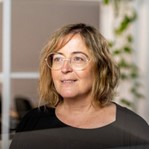
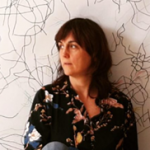
"With this project we want to establish a transdisciplinary collaboration between artists and scientists from CREAF, with the condition of speculating together ways of conceptualizing time, taking as a starting point the biodiversity of the forest and its view of time as something provisional, extensive and cyclical that admits all possibilities."
A journey through time in 4 seasons and 5 senses
The drift began with the introduction of the attendees and an unexpected breakfast in the patio of Can Balasc. “It was supposed to rain today,” Rosa indicated, but the weather held out. In fact, there was radiant sunshine and a strangely pleasant temperature for that time of year.
"Time cannot be seen or felt. And even less can it be touched, nor has anyone ever tasted or inhaled it."
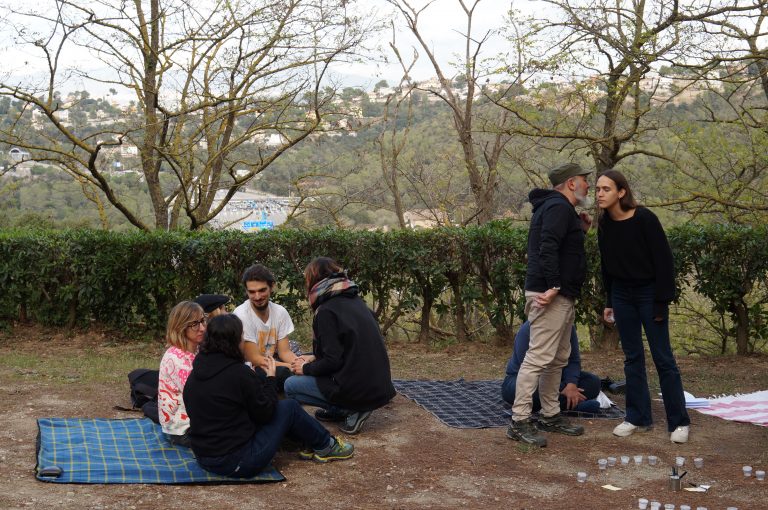
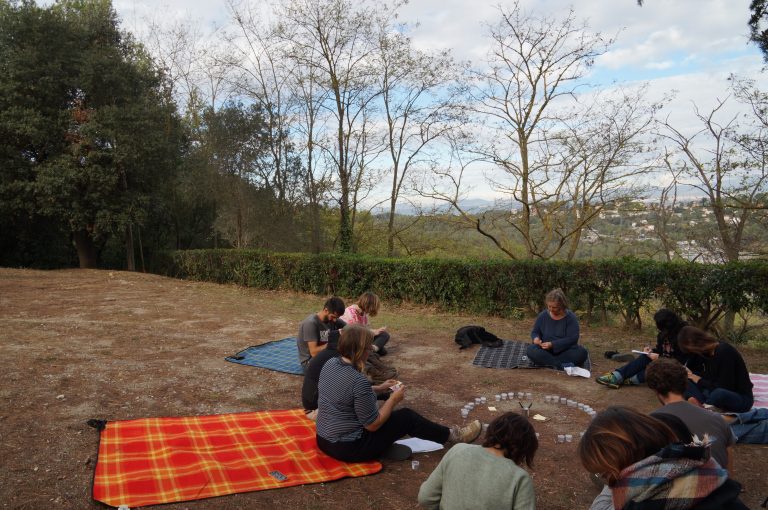
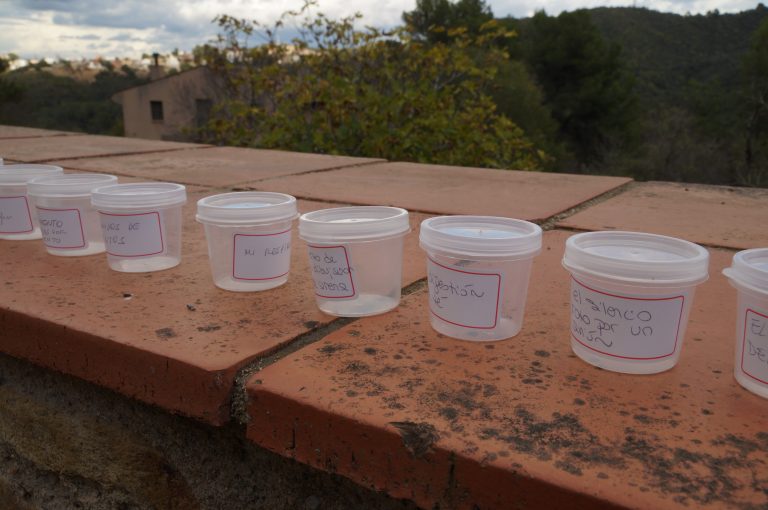
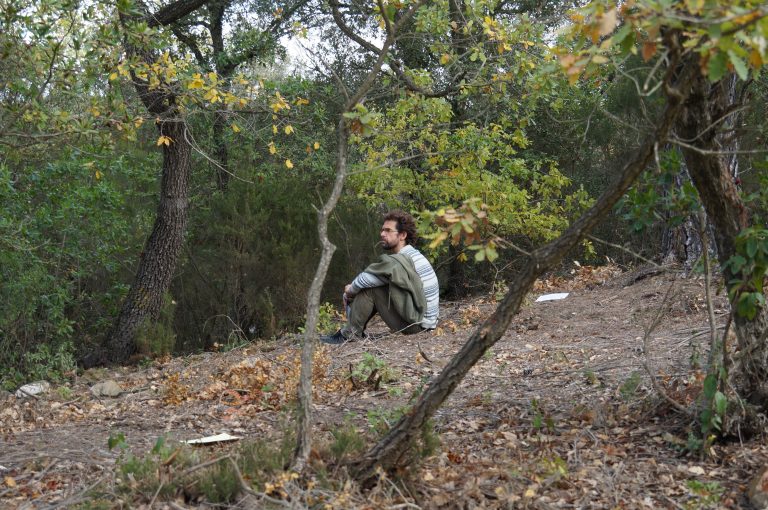
With the reading of this poem by the philosopher and art critic Daniel Soutif, we began the first activity dedicated to awareness . In silence and sitting on the grass we refuted Soutif's statements: we observe, listen and touch our surroundings feeling the passing of time. This became tangible, for example, through the silence broken by the sounds of the forest, the regular songs of birds or the noise of cars. Also in the sensations of digestion or the temperature changes of the breeze. Even the clouds already seemed like hourglasses to us. All the experiences were recorded, stored in sample jars and told in whispers to other participants.
Previous
Next
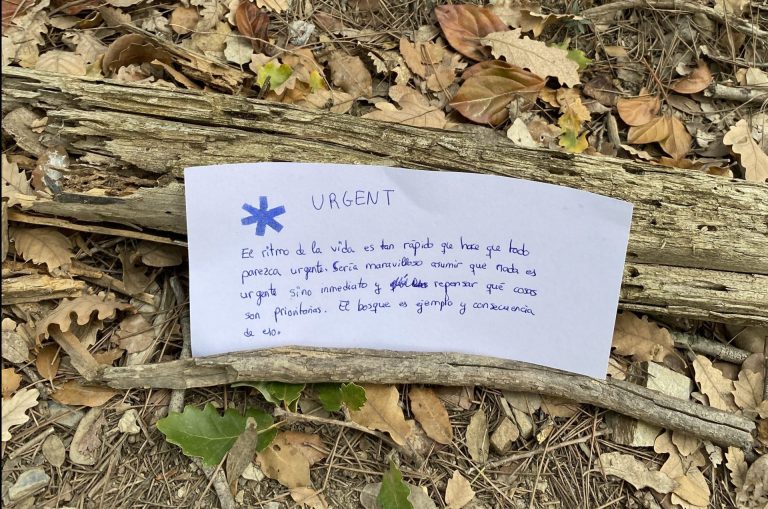
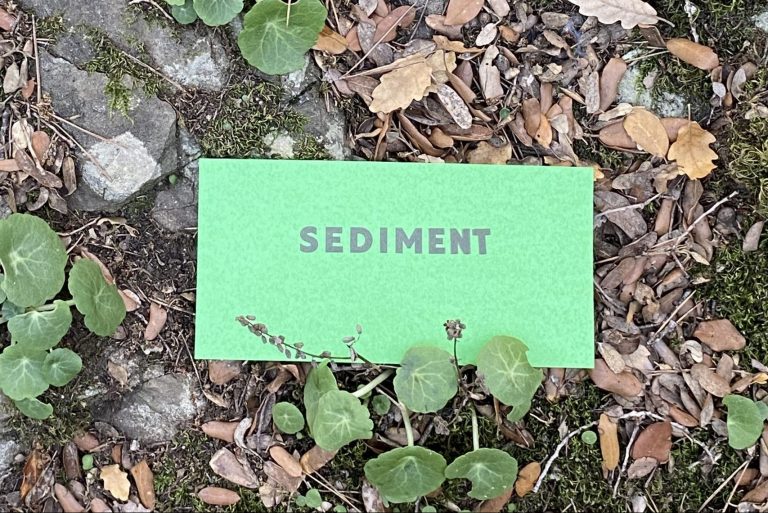
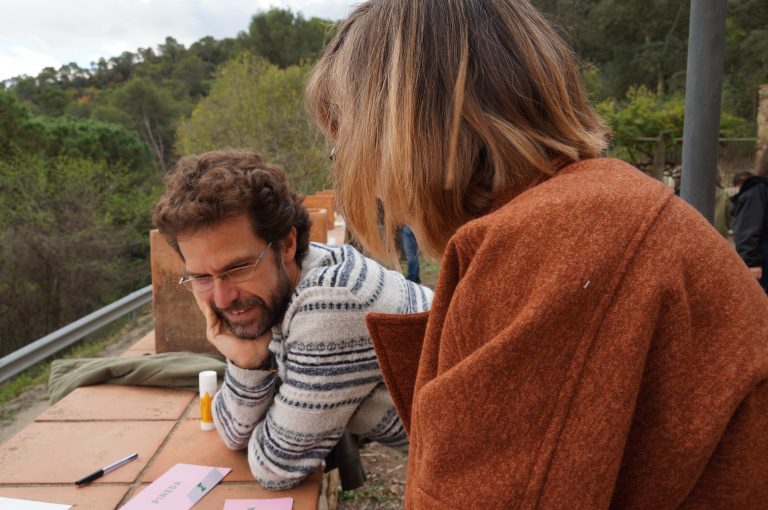
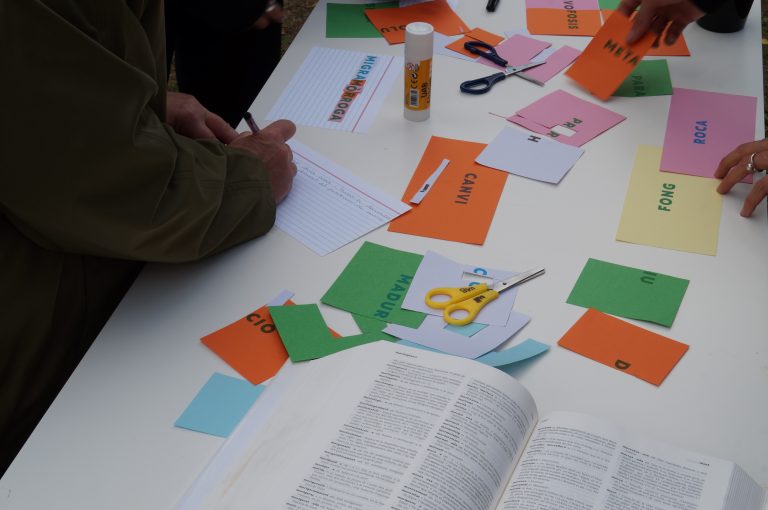
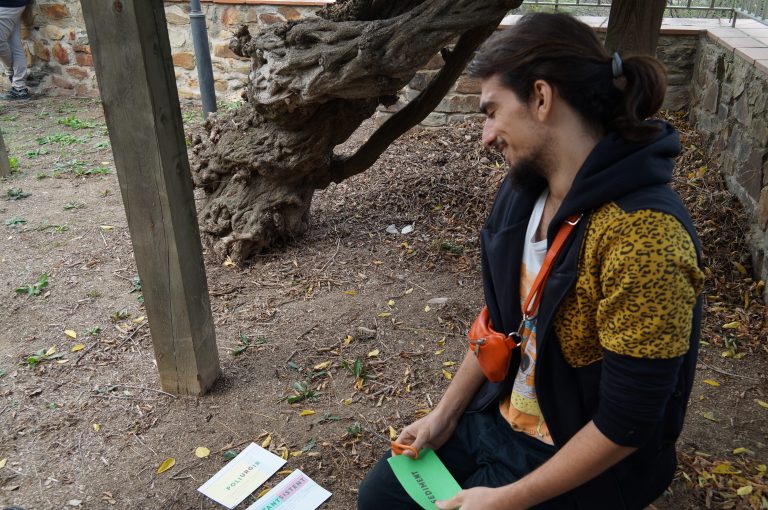
For the second activity, metamorphosis , we approached a table with colored cards arranged in a mosaic; each of them contained a word related to time in nature. Gemma and Rosa invited us to choose three that related to our profile. Then, we walked through a plot of the forest where even more words awaited us, hidden in nature. Among the leaves of the trees or tearing through the undergrowth, we came across concepts that challenged us. The slogan was to take three words and leave, in the same place, a note as a trace of our experience with each of them. The forest functioned as an inspiring setting to reflect at our own pace and move away from the productivist vision of time.
Previous
Next
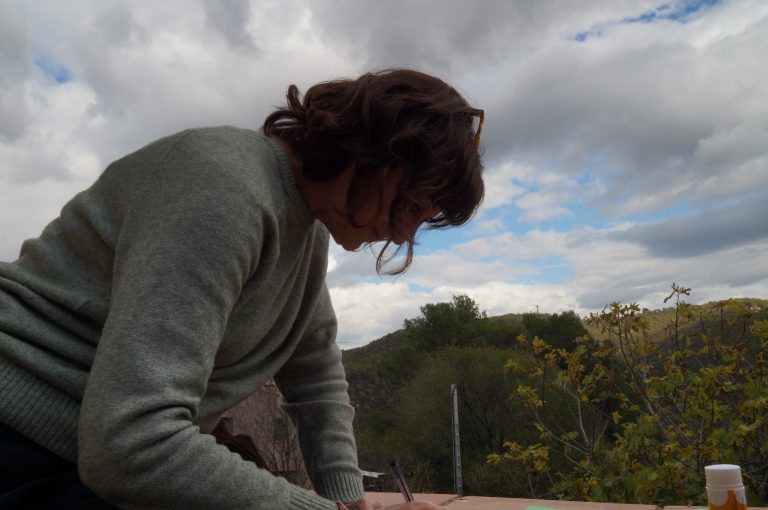
During a creative moment, we were encouraged to combine all these words to invent new concepts related to time. For each one, we had to associate a definition and a drawing that represented the trace they would leave in time.
Previous
Next
With the arrival of the first drops of rain we took refuge in the kitchen of Can Balasc where a vermouth awaited us. Inside we shared our words and experiences in this first experience.
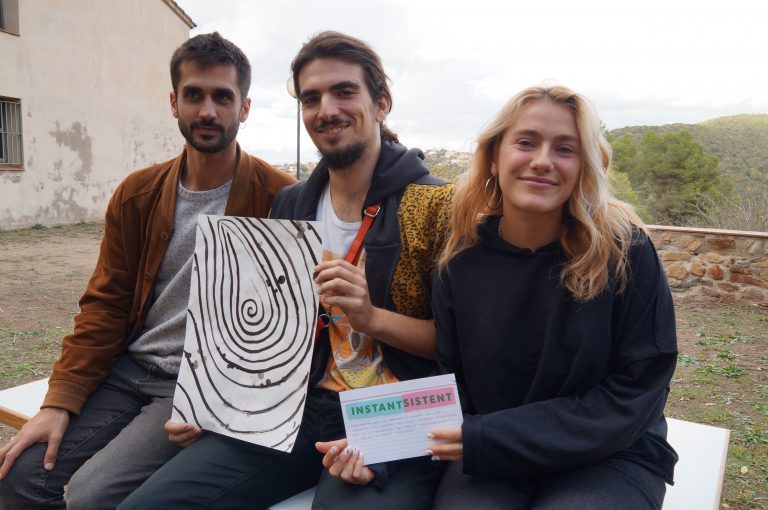
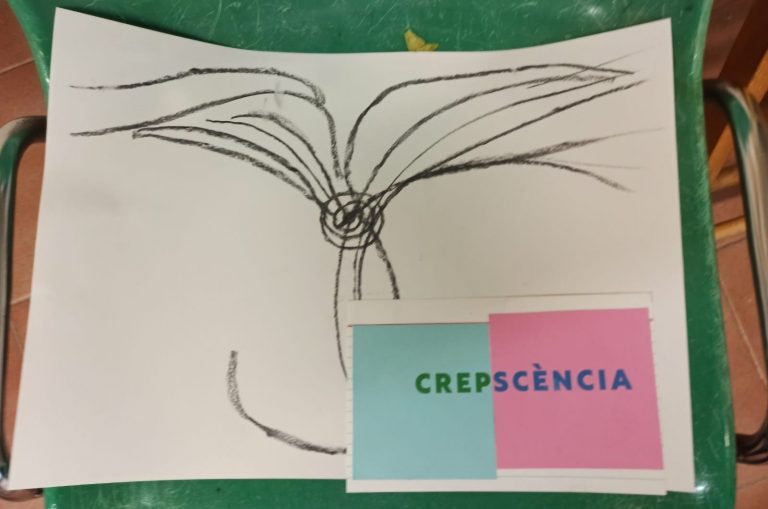
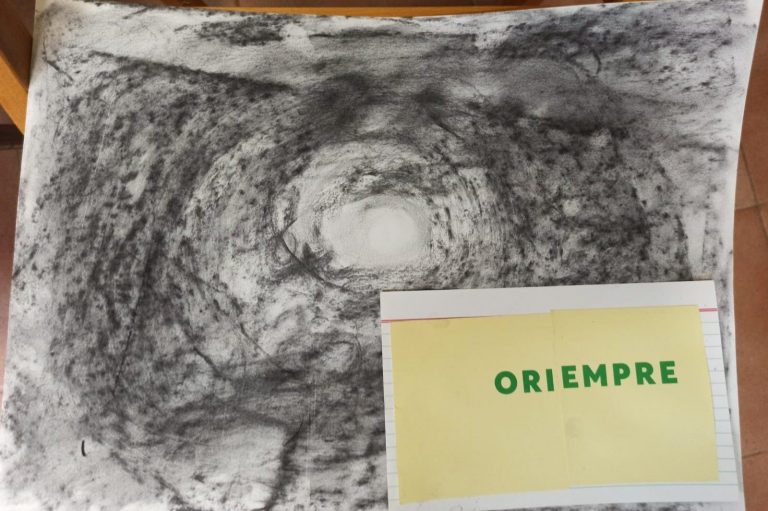
Previous
Next 
"I liked how this reflection on time questions the tempos and speed with which we do things in the day-to-day of our research activity, and how this contrasts with the characteristic, much slower time of the systems we study."
Collaborate with this scientific-artistic project!
If you feel that your science also beats to the rhythm of nature, Gemma and Rosa invite you to participate in this project. Send them a Whatsapp audio of maximum 1 minute to the number 634 65 53 74 answering the question: What is the relationship of your object of study with time? You have until January 31st .
Chronicle written by Diego de la Vega and Florencia Florido.