Restoring nature, early warning systems and governance are key to protecting the Mediterranean from future floods

The Mediterranean region is one of the epicenters of climate change: it is warming 20% faster than other areas and is already experiencing the impacts of extreme events such as heatwaves, large wildfires, biodiversity loss, and torrential rains. The latter remains vivid in the collective memory of Spain and Catalonia after the DANA in Valencia one year ago and the floods in the Ebro Delta last month. In this context, the Natural Heritage Mission of the Interreg Euro-MED programme brings together a consortium of 16 Mediterranean entities working to share knowledge, develop tools, and connect the results of 18 projects funded by the programme with a broad community of public administrations, research institutions, NGOs, SMEs, sectoral organisations, and other key actors of the Mediterranean. The aim is to jointly address pressing environmental challenges such as these.
Three of these initiatives focus specifically on protecting the most vulnerable cities and territories from flooding. Some of their results will be presented from 25 to 27 November in Barcelona, ahead of the Mediterranean Day on the 28th, at an in-person event organised by CREAF—responsible for knowledge-transfer activities—together with MedCities, bringing together more than 130 political, technical, and scientific profiles.

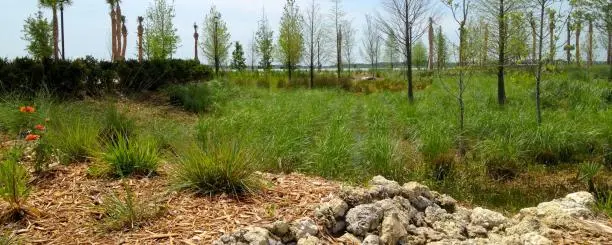
L'Albufera, Valencia. Author: Wetland4Change , coordinated by the Forestry University of Bulgaria and one of the projects of the Interreg Euro-MED program.
Anticipating flash floods, protecting wetlands & monitoring sea-level
Anticipating flash floods, protecting wetlands & monitoring sea-level
One of the projects is LocAll4Flood, coordinated by the Beta Technological Centre, which brings together administrations, research centres, universities and enterprises to improve the the flood risk management. The plan includes concrete actions such as an early-warning system to better protect population of flash floods; a methodology to improve decision-making among different territorial actors; and a catalogue of nature-based solutions to help adapt the region, for example, reforestation, urban parks or permeable pavements. These measures are being implemented in nine pilot basins, including Vic and Gurb in Catalonia and the Torrents Gros and Na Bàrbara in Mallorca.
For its part, Wetland4Change, coordinated by the University of Forestry in Bulgaria, aims to reverse wetland degradation in the Mediterranean in order to reduce the impacts of heavy-rainfall events on adjacent water bodies and increase wetlands’ capacity to capture carbon. It is implementing concrete actions in five pilot areas, including the Albufera of Valencia which, just one year ago, was severely affected by the DANA storms—an event that exposed both the fragility of the system and the urgent need for wetland restoration. In addition, the project has developed a Mediterranean wetland database and a transfer plan to help administrations and protected-area managers integrate these solutions into their policies.
For its part, Wetland4Change, coordinated by the University of Forestry in Bulgaria, aims to reverse wetland degradation in the Mediterranean in order to reduce the impacts of heavy-rainfall events on adjacent water bodies and landscapes, by regulating peak flow and surface run-off. Meanwhile, the MedSeaRise project, coordinated by Anatoliki, it assesses risks linked to sea-level rise across Mediterranean basins, including flooding. To do so, it relies on advanced climate projections and includes case studies in six coastal areas, one of which is Delta de Llobregat.
YOU MAY ALSO BE INTERESTED IN
YOU MAY ALSO BE INTERESTED IN
Fostering dialogue
Fostering dialogue
Beyond raising the visibility of project results, a cross-cutting pillar of this Interreg Euro-MED initiative is the promotion of improved collaboration across the Mediterranean region. “We create opportunities for dialogue and transference of knowledge between the over 250 organisations of the Natural Heritage Mission Community and beyond” explains Annelies Broekman, CREAF researcher who coordinates the amplification strategy.
Under this umbrella of collaborative culture, the partners have also launched a campaign addressed to the general society to showcase good practices in environmental governance. In the case of Catalonia, two experiences stand out. One is Life eCOadapt50, led by the Barcelona Provincial Council, where municipalities participate in living lab settings enabling theintegration of climate adaptation into the agricultural, livestock, forestry, fisheries, and tourism sectors. They have also highlighted the Veus del Territori (“Voices of the Territory”) initiative, in which the Nature Conservation Network has collected testimonies from people and organisations delivering stewardship agreements to conserve nature in Catalonia. “Another initiative at the Spanish level is the Guadalete River contract in the Campiña de Jerez, coordinated by the New Water Culture Foundation and involving various actors to jointly preserve the river,” adds Broekman.
Barcelona as a meeting point
Barcelona as a meeting point
Some of the results of the projects that form part of the Interreg Euro-MED Natural Heritage Mission will be presented between 25 and 27 November in an event bringing together the Missions’ Community including policymakers, experts, and Mediterranean entities. The meeting, co-organised by CREAF and MedCities with the support of various international institutions, comes at a time of renewal of Mediterranean policies, including the new Mediterranean Pact, the Oceans Pact, the revision of the Mediterranean Strategy for Sustainable Development, and the recent EU Nature Restoration Law.
The event will explore the opportunities opened by these frameworks to address the major socio-environmental challenges facing the Mediterranean, such as restoring nature and adapting to the growing impacts of climate change. It will also give a voice to Interreg Euro-MED projects that are already implementing innovative solutions in terrestrial and marine ecosystems: reducing the impact of floods, restoring soil to capture more carbon, reducing pollution in coastal ports, and improving forest management to adapt forests to climate change.
“We want this event to strengthen cooperation among key Mediterranean actors, both political and scientific, at a time when action is more urgent than ever. We further wish to highlight the role of local authorities as implementers, and in the very practical response to all global and regional challenges concludes Carolina Pérez, Head of Policy and Knowledge sharing at MedCities. For example, thanks to the collaboration with the Union for the Mediterranean, key recommendations formulated by the experience from the Missions’ projects will be transmitted to the Regional Forum for the Mediterranean and the Convention for the Protection of the Marine Environment and the Coastal Region of the Mediterranean, thus reaching out to key decision makers.