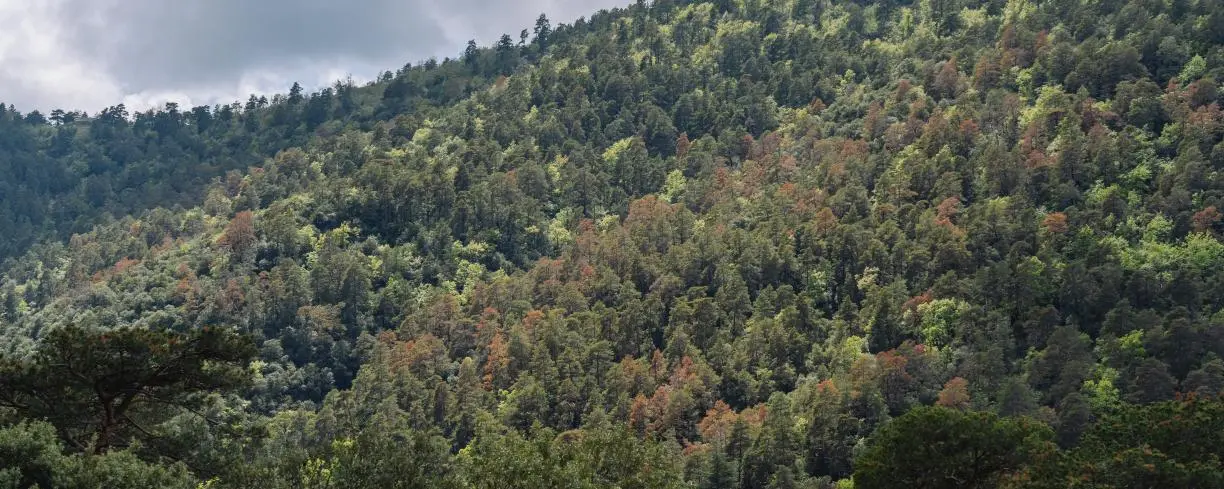
When it rains after a drought, it seems that everything returns to normal and that vegetation recovers. However, some of the consequences of the lack of water can persist during the following year. This is the conclusion of a study carried out on a global scale and recently published in Nature Communications, with the participation of the CSIC and CREAF. The results show that, if the soil continues to lose moisture throughout the year following a drought, the temperature increases more than it decreases when it recovers the same amount of water it had lost. Specifically, when the soil loses a certain amount of water, the temperature rises by 0.13°C and when the soil recovers the same amount of water it lost, the temperature falls by only 0.06°C. This is partly because plants do not recover at the same rate as the water in the soil: after a drought, they may have accumulated damage to their plant tissues and their ability to transpire and absorb CO₂ takes time to recover. As a consequence, the cooling effect of vegetation decreases and global warming increases.
“We observed the scars left by drought one year after it has passed in the study,” explains Josep Peñuelas, CSIC researcher at CREAF. According to the researcher, the reason is that plants absorb water from the soil and transport it to the leaves, where small pores called stomata regulate gas exchange and water loss. When there is enough water, the stomata remain open and allow CO₂, which is necessary for photosynthesis, to enter, while some of the water leaves the leaf as vapour through transpiration. This water vapour helps dissipate heat and cool the vegetation and the air surrounding it.